Menu

Philippine Standard Time:

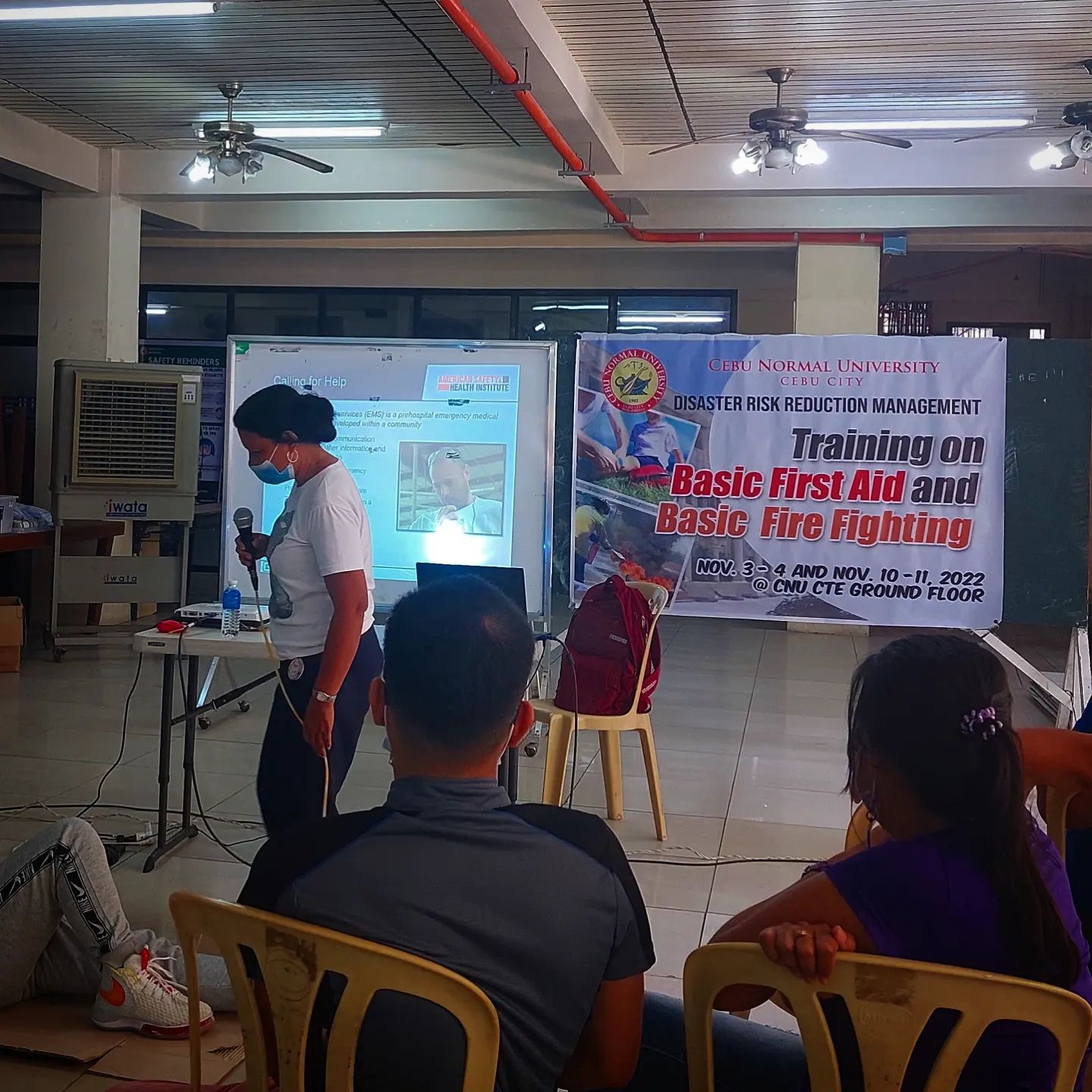
Though often undervalued and overlooked in the hustle-bustle of life, health remains the greatest wealth. CNU adheres to this age-old adage through action. Volunteering, research, training, and seminars are the norm. To name a few of the university’s efforts: there are programs that the university constantly participates, most notably, Red Cross; collaborative works with its alumni and other professionals in the Balik Scientist; developing innovations such as the Online Serbisyo Klinika sa Komunidad; and a variety of research works in all aspects of health including mental health.

CNU is also always ready to provide help and relief to its community even during the pandemic. Educators utilized 3D printers in the university to make face shields donated to health workers and medical frontliners in the city. Charity works are also worth noting such as Project Balay Samaritano wherein the basic needs of street children and adults were provided.

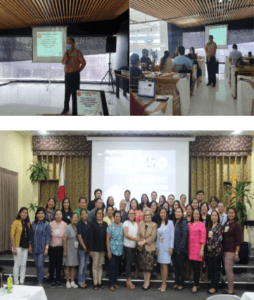
 

  • Sexual and reproductive health care services for students
    Provide students access to sexual and reproductive health-care services including information and education services. 
    Free Access

  • Health outreach programmes
    Deliver outreach programmes and projects in the local community (which can include student volunteering programmes) to improve or promote health and well-being including hygiene, nutrition, family planning, sports, exercise, aging well, and other health and well-being related topics.
    This can also include outreach programmes to displaced or refugee communities local to the institution.

  • Current collaborations with health institutions
    Have current collaborations with local, national, or global health institutions to improve health and well-being outcomes.

  • Mental health support for staff
    Provide staff with access to mental health support.

    Active promotion of good mental health
CNU-Medellin celebrates World Mental Health
Cebu Normal University-Medellin Campus (CNU-M) marked World Mental Health Day,...

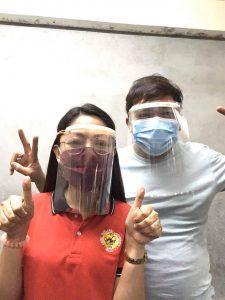
Cebu Normal University (CNU) educators utilized 3D printers in the University to make face shields donated to health workers and medical frontliners in the city. Physics teachers Ms. Clare Maristela Galon and Mr. Allan Roy Elnar, both from the Chemistry and Physics Department of Cebu Normal University (CNU) made use of the 3D printers in the school’s Physics laboratory to make frames used in making face shields.

Galon said that they thought of maximizing the two 3D printers in the Physics laboratory to make Personal Protective Equipment (PPEs) to be donated to Coronavirus Disease 2019 (COVID-19) frontliners.  She and Elnar are assisted by their co-teachers, Mr. Gibson Maglasang and Mr. Carl Patrick Casas, both from the Physics Department, in making the face shields.


https://www.cnu.edu.ph/wp-content/uploads/2020/04/94490183_847033972469254_6838568179912933376_n-225x300.jpg

Ms. Clare Maristela Galon (left) and Mr. Allan Roy Elnar (right) poses a wacky photo wearing the PPEs. 

She said that they have been using Polylactic Acid (PLA), a formula used to create plastic films, food containers, and the like to print the shield frames. The

Shield frames were designed using an Auto Computer Aided Design (CAD), a software application for modeling, Galon said. 

Acetates coming from the University’s Supply office were used as the actual face shields. Galon shared that they first utilized rubber bands for the retainers but soon upgraded it into garters with the aid of donations coming from the Innovative CNU Assistance and Relief Effort (iCARE) Donation Center.

Lorem ipsum dolor sit amet, consectetur adipiscing elit. Ut elit tellus, luctus nec ullamcorper mattis, pulvinar dapibus leo. 

https://cnu.edu.ph/wp-content/uploads/2020/03/Optimized-blank-to-mock-up-for-fb-post-07-2-1.jpg

Cebu Normal University (CNU) launched a program to assist its students, faculty, office personnel, and other stakeholders in the time of health crisis brought by Coronavirus Disease 2019 (COVID-19). 

The program is called Innovative CNU Assistance and Relief Effort (iCARE). The creation of iCARE was conceptualized by CNU President Dr. Filomena Dayagbil and was established through the help of the CNU Administrative Council and some faculty members.

iCARE was launched last Monday, March 23 online through the University’s official Facebook page.

The iCARE program initially has three services: iCARE Student Communication Center (SCC); iCARE Telecounseling Services; and iCARE Donation Center. Later on, the iCARE Ride, iCARE Pedagogical Connect, and and iCARE Adopt-a-Student were conceptualized to add to the growing list of services under the iCARE initiative.  

“Innovation breeds because of a need,” Dayagbil said on how iCARE sprouted because of the COVID-19 health crisis. “I am thinking of how CNU can best respond and be significant for both our internal and external clients as gestures of love and care,” she said.  

“With the suspension of classes and declaration of community quarantine, CNU has to attend to the needs and concerns of the students and keep the line of communication open to avoid confusion,” she added, explaining how iCARE SCC came about. 


iCARE SCC is facilitated by the CNU Supreme Student Council (SSC) where students who wish to express their concerns, challenges, and difficulties related to the ongoing community quarantine may contact the numbers provided in the SSC and CNU Facebook

https://www.cnu.edu.ph/wp-content/uploads/2020/03/blank-to-mock-up-for-fb-post7-10-1024x935.png

The iCARE SCC has started operating since the launching of iCARE and is available daily from 7 AM. to 9 PM.


iCARE Telecounseling Services is also provided for CNU students, faculty, and non-teaching staff wherein guidance counselors and Psychology professors are made available to those who need a listening ear, Dayagbill said.

https://www.cnu.edu.ph/wp-content/uploads/2020/03/blank-to-mock-up-for-fb-post8-09-1024x935.png

“This is one way of protecting our mental health in this new normal we are experiencing,” she said.  Tele counseling hotline numbers are found in the CNU Facebook page which are directly connected to counselors/coaches and are available from 6 AM. to 9 PM.


iCARE Pedagogical Connect is an effort of the College of Teacher Education (CTE) which offers free online services to students, teachers, administrators, and parents from different levels where facilitators engage themselves to different stakeholders by answering queries on different areas of concern in line with education. Stakeholders who are interested may register through this link: https://bit.ly/2UAdegP

https://www.cnu.edu.ph/wp-content/uploads/2020/03/blank-to-mock-up-for-fb-post15-11-1024x935.png


iCARE Adopt-a-Student is facilitated by the CNU-OSA in coordination with the CNU Student Supreme Council. This initiative calls for donors to assist students who are stranded in Cebu during the implementation of Enhanced Community Quarantine (ECQ) by providing them basic needs or financial assistance while they still cannot go home.


https://cnu.edu.ph/wp-content/uploads/2020/11/HEdConnect-9-Banner.png

Nurses and healthcare professionals convened to discuss the importance of risk communication and care for the elderly in the onslaught of Coronavirus Disease 2019 (COVID-19) pandemic during the 9th session of Higher Education Connect (HEdConnect).

HEdConnect 9 with the theme Convergence of Nursing Viewpoints, Experiences, Nurturance, and Engagement (CONVENE) was held last November 27, 2020, via Zoom and was live-streamed at the Cebu Normal University (CNU) Facebook account. 

The international webinar was organized by the CNU College of Nursing (CN) in collaboration with the Research Institute for Ageing and Health (RIAH), CNU Nightingale Student Council, and Central Visayas Consortium for Health Research and Development.

Dr. Emiliano Ian Suson II, CNU-CN Dean, said that he hopes the webinar will be an opportunity for nurses and healthcare professionals to inspire each other and continue to advance in the nursing profession and practice.


Mrs. Jillian Bejoc, CNU-CN Research Coordinator and RIAH Division Chair said that the HEdConnect 9 is a prelude to the upcoming 10th International Conference of Nurses (ICONS) on May 2021 with the same goal of providing an avenue for nurses across different fields to share the best practices in the academe, clinical practice, and in research. 
https://cnu.edu.ph/wp-content/uploads/2019/11/75540016_2733405280060270_746815102476353536_o.jpg

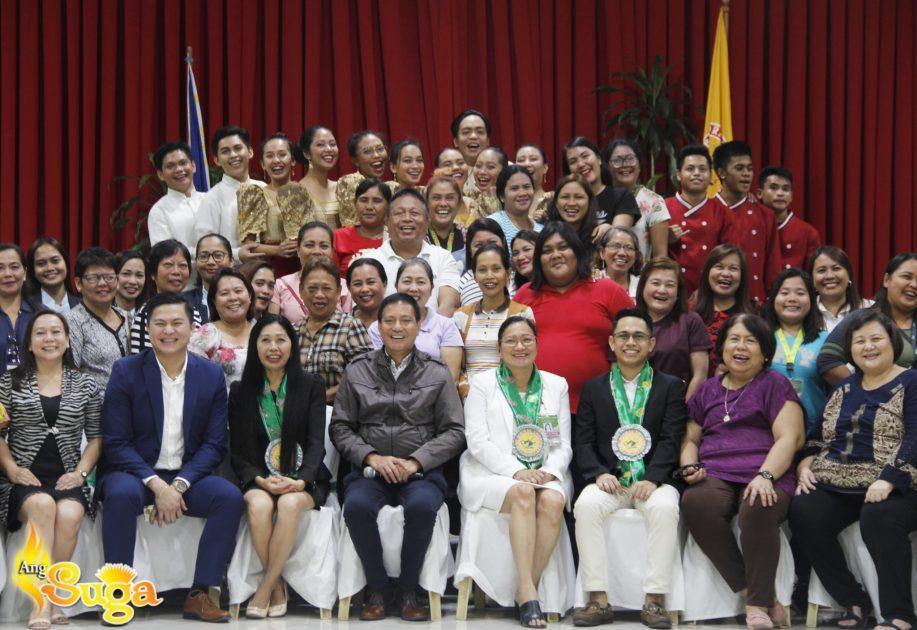
To raise awareness of dengue intervention, Cebu Normal University (CNU) with the participation of Cebu City Government and City Health Office launched its first assembly on dengue awareness and mosquito control held at Teaching Arts Centrum Auditorium last Friday, with the theme, “Dengue Awareness and Mosquito Control: Enabling Innovations for Sustainable Development”.

The event started with a welcoming remark by University President Dr. Filomena T. Dayagbil, stating that the university is honored to be chosen as a host of the said congress.

“As a state university funded by the government, it is our responsiblity to make sure to partner with the agencies in the government and make the government’s projects and activities successful as they cascade down to our stake holders and collegues,” Dayagbil explained.


Hon. Michael Rama, the Vice Mayor of Cebu City and Chairman Committee on Health Hospital Services and Sanitation, served as the keynote speaker, saying that each individual in the government, health sector, and barangay, needs to be vigilant in maintaining cleanliness and responsibility to eradicate the causes of dengue in the community that they belong.
other SDG to view

X
Cebu Normal University
PRIVACY POLICY

Policy Statement

This Privacy Policy is adopted in compliance with the Data Privacy Act of 2012 (Republic Act No. 10173), its Implementing Rules and Regulations (IRR), and other relevant issuances of the National Privacy Commission (NPC). The University is committed to protecting and respecting your personal data privacy. We process personal information in accordance with the principles of transparency, legitimate purpose, and proportionality. This Policy informs how we collect, use, disclose, store, protect, and dispose personal information of our data subjects.

Definitions

Personal information refers to any information, whether recorded in a material form or not, from which the identity of an individual is apparent or can be reasonably and directly ascertained by the entity holding the information or when put together with other information that would directly and certainly identify an individual.

Sensitive information is a type of personal information with the risk of discrimination against the Data Subject. These are about an identifiable person’s racial or ethnic origin, marital status, color, and religious, philosophical, or political affiliations. It is also, about an individual’s health, education, the genetic or sexual life of person, or any proceeding for any offense committed or alleged to have been committed by such person, the disposal of such proceedings, or the sentence of any court in such proceedings; Issued by government agencies peculiar to an individual which includes, but not limited to, social security numbers, previous or current health records, licenses or its denials, suspension or revocation, and tax returns; and specifically established by an executive order or an act of Congress to be kept classified.

Privileged information refers to any and all forms of data which under the Rules of Court and other pertinent laws constitute privileged communication.

Information We Collect

The University may collect personal information in the context of its regular functions — including but not limited to the following categories:

  1. Students: contact and enrollment details, academic records, health or medical records, accommodation records, student-activity participation, and related data.
  2. Staff and job applicants: contact details, employment history, qualifications, employee-related data.
  3. Alumni profiling: contact and demographic details.
  4. Visitors, volunteers, and other stakeholders: information collected through sign-in forms, CCTV or security monitoring, photos or recordings during official events, surveys, and feedback forms.

Collection may occur by any medium, including: paper forms, electronic forms, email, website or online platforms, CCTV or video/photographic capture, surveys/questionnaires, and other lawful means.

Purposes and Uses of the Data Collected and Processed

Personal information collected may be used for:

  1. Administration of admission, enrollment, employment, alumni relations, and other official functions.
  2. Maintenance of student and employee records, including academic, health, and administrative data.
  3. Provision of University services such as counseling, scholarship administration, placement, library access, facilities use, laboratory access, security, parking, and accommodation.
  4. Internal research, quality assurance, performance monitoring, and institutional planning.
  5. Compliance with statutory obligations (e.g. reporting to government agencies when required).
  6. Security, safety, and campus management, including CCTV monitoring.

Legal Basis / Lawful Criteria for Processing

All processing of personal data is carried out in accordance with the legality, fairness, and lawfulness requirements under the Data Privacy Act and IRR.
Where applicable, processing is grounded on consent, contract, legal obligation, legitimate interest, or other lawful bases recognized under the law. The choice of lawful basis depends on the nature of data, the purpose of processing, and legal or contractual requirements.

Manner of Collection and Processing

Personal data may be collected through physical forms (paper-based), electronic forms, online or web-based platforms (e.g., registration portals, email, institutional website), CCTV or video/photo capture (for security or surveillance), event sign-in sheets or registration forms, surveys or questionnaires, or other legitimate and lawful means.

Processing may include collection, recording, sorting, storing, retrieval, use, updating, modification, blocking, destruction or other operations as allowed under the law, consistent with declared purposes.

Disclosure of Information

The University does not disclose personal information except under the following circumstances:

  1. Internal disclosure within authorized University personnel, only when necessary and appropriate for legitimate institutional purposes.
  2. External disclosure only when required or permitted by law (e.g. statutory obligations), or when the data subject has provided valid consent.
  3. Sensitive personal information or privileged information is processed and disclosed only in accordance with relevant legal provisions.

Risks, Safeguards and Security Measures

The University recognizes that processing of personal data entails certain privacy and security risks. Accordingly, we implement appropriate organizational, technical, and physical security safeguards to protect the confidentiality, integrity, and availability of personal data — whether in electronic or physical form. Such measures include (but are not limited to):

  1. Access controls (both digital and physical) to restrict access only to authorized personnel
  2. Use of secure storage: locked filing cabinets or secure rooms for physical records; password-protected systems, encryption, secure servers, firewalls for electronic data
  3. Secure transmission of data (when shared or transferred), secure printing and disposal protocols, and safe deletion or destruction of data when no longer needed
  4. Classification of data and periodic review of security protocols, to ensure adequacy in light of the risks presented and sensitivity of the data processed

Rights of Data Subjects

Under the Data Privacy Act and its IRR, data subjects have the following rights:

  1. Right to be informed — you have the right to know whether personal information about you will be, is being, or has been processed; the purposes of processing; the personal data to be entered; and the scope and method of processing.
  2. Right to access, correct, or update your data — you may request access to your personal information, ask for rectification of inaccuracies, or request updates.
  3. Right to object or withdraw consent — when processing is based on consent or legitimate interest, you may withdraw consent or object, subject to legal limits.
  4. Right to data portability — where applicable, you may obtain a copy of your personal data in a secure and portable format for transfer to another controller.
  5. Right to erasure or blocking — if personal data is incomplete, outdated, unlawfully obtained or processed, no longer necessary, or processing is unauthorized, you may request erasure or blocking, subject to legitimate grounds for retention (e.g. legal obligations or defense of legal claims).
  6. Right to damages — you may seek indemnification for damages resulting from inaccurate, incomplete, outdated, unlawfully obtained or unauthorized use of your personal data.
  7. Right to lodge a complaint with the NPC if you believe your data privacy rights have been violated.

Requests for access, rectification, objection, portability, erasure or complaints may be submitted in writing to the University’s designated Data Protection Officer (DPO) or Data Privacy Office.

Security, Retention, and Disposal

The University implements appropriate organizational, technical, and physical security measures to safeguard personal data — whether in paper or electronic form — against unauthorized access, disclosure, alteration, or destruction. Such measures include: secure storage (locked filing cabinets or rooms), restricted access to authorized personnel only, use of locked screens/screensavers, secure transmission (sealed envelopes or secure electronic transmission), secure printing and disposal of documents, and safe deletion or destruction of data when no longer needed.

Personal data will be retained only for as long as necessary to fulfill the declared and legitimate purposes, or as required for legal obligations or defense of legal claims. When no longer needed, personal data will be disposed of securely in accordance with University policy and relevant data-protection guidelines.

Consent, Notice, and Legitimate Processing

Where required by law, consent will be obtained from data subjects prior to collection or processing of their personal or sensitive data. In other cases (e.g. CCTV monitoring, legitimate interest), the University will inform data subjects through appropriate notice mechanisms before or at the time of data collection. Privacy notice(s) will accompany data-collection forms or be posted in conspicuous campus areas, and on the University website. At all times, data processing is based on legitimate purpose and proportional to the need.

Data Subject Access and Contact

To exercise your rights or if you have any inquiry, concern, or request regarding your personal data, please contact:

Omar B. Roma

Data Protection Officer
Email: dpo@cnu.edu.ph
Phone: 09422041421

Changes to This Policy

The University reserves the right to update or amend this Privacy Policy as necessary to reflect changes in applicable laws, regulations, regulatory guidance, or its internal data-processing practices. Updated versions will be posted on the University’s official website and, where appropriate, communicated to data subjects.