Menu

Philippine Standard Time:
90th National Book Week Celebration 2024 List of Winners
National Book Week 2024 at Cebu Normal University – Balamban Campus
Library Caravan at Balamban Campus
previous arrow
next arrow
Slider

Latest POsts & Updates

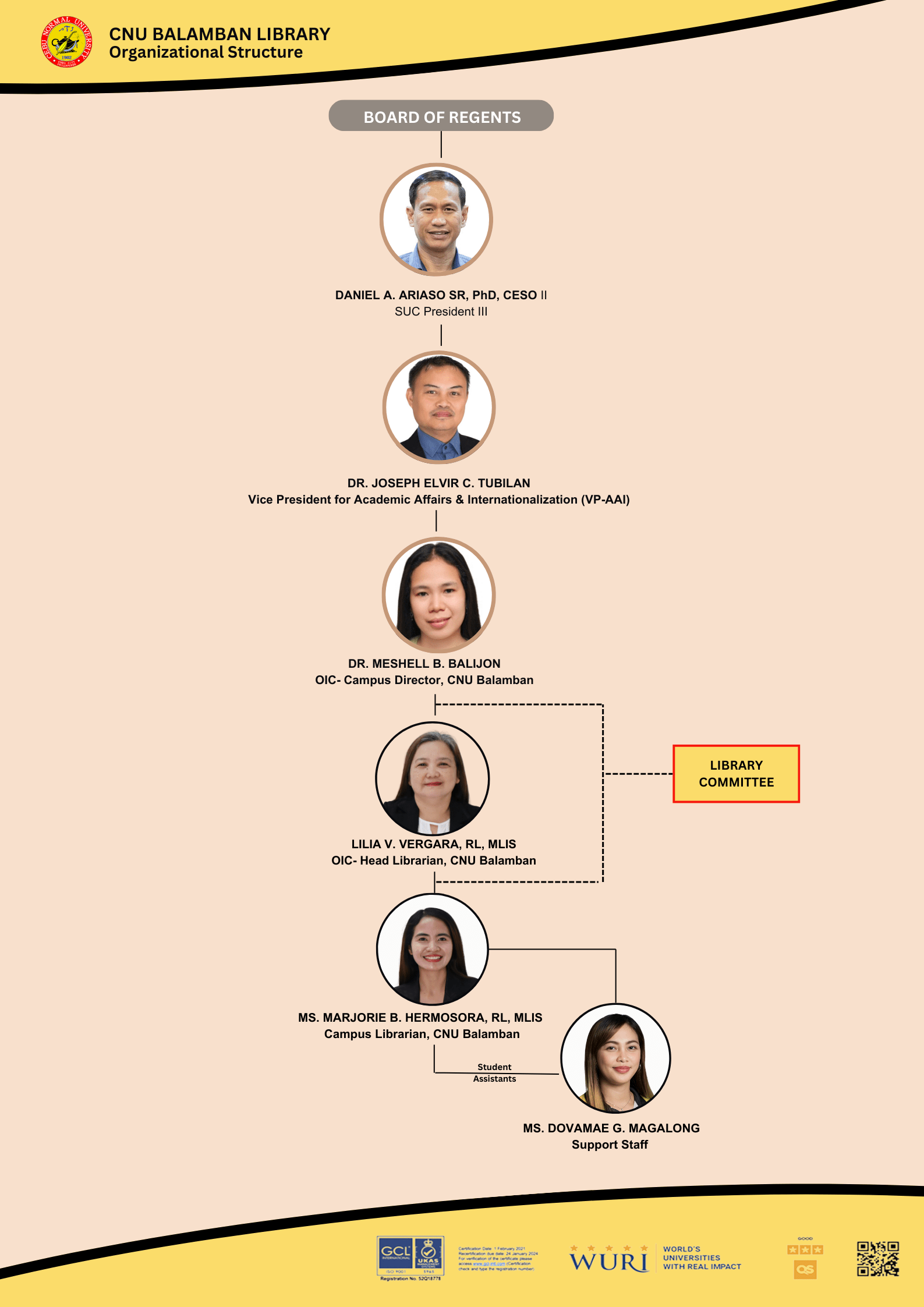
Organizational Chart

SECTIONS

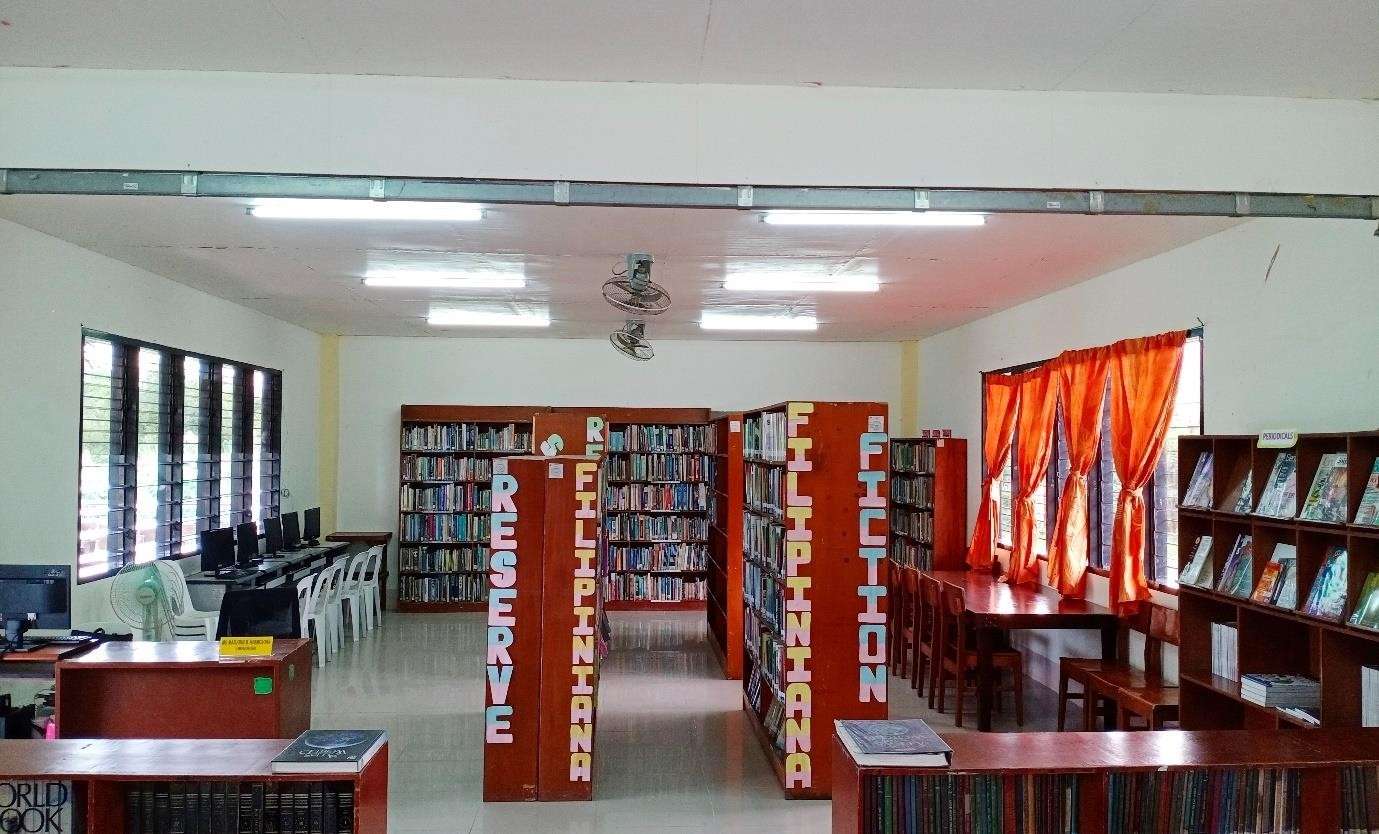
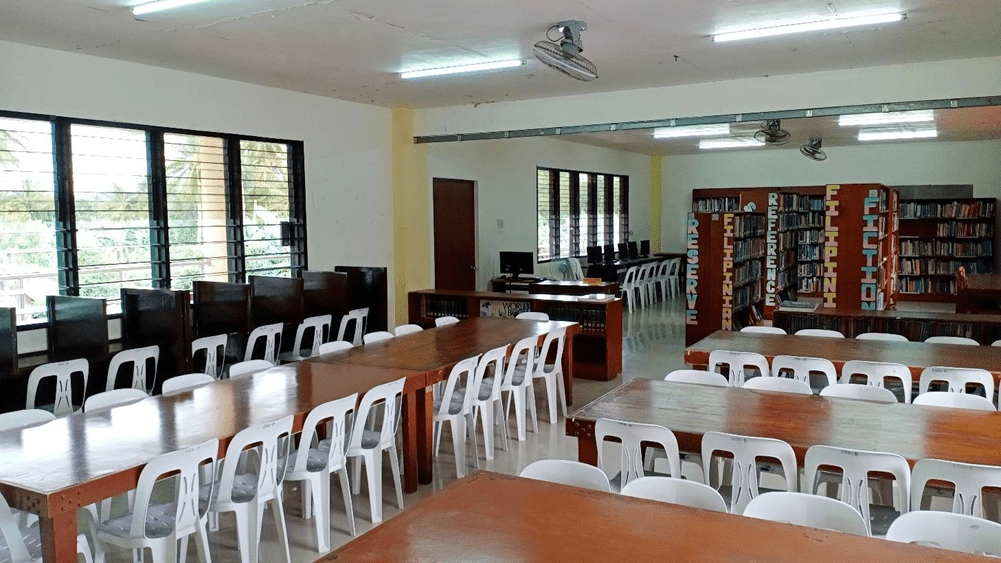
RESERVE, FILIPINIANA, & FICTION SECTION

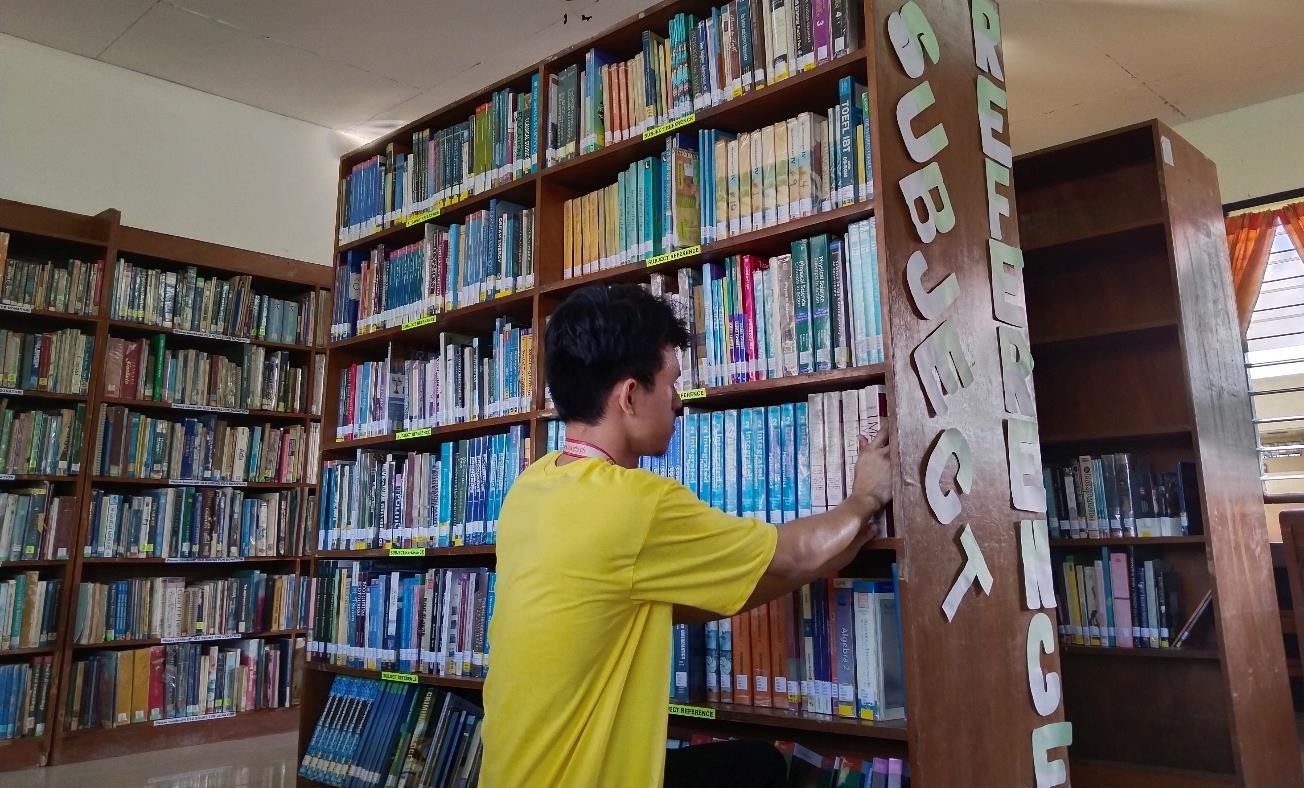
SUBJECT REFERENCE SECTION

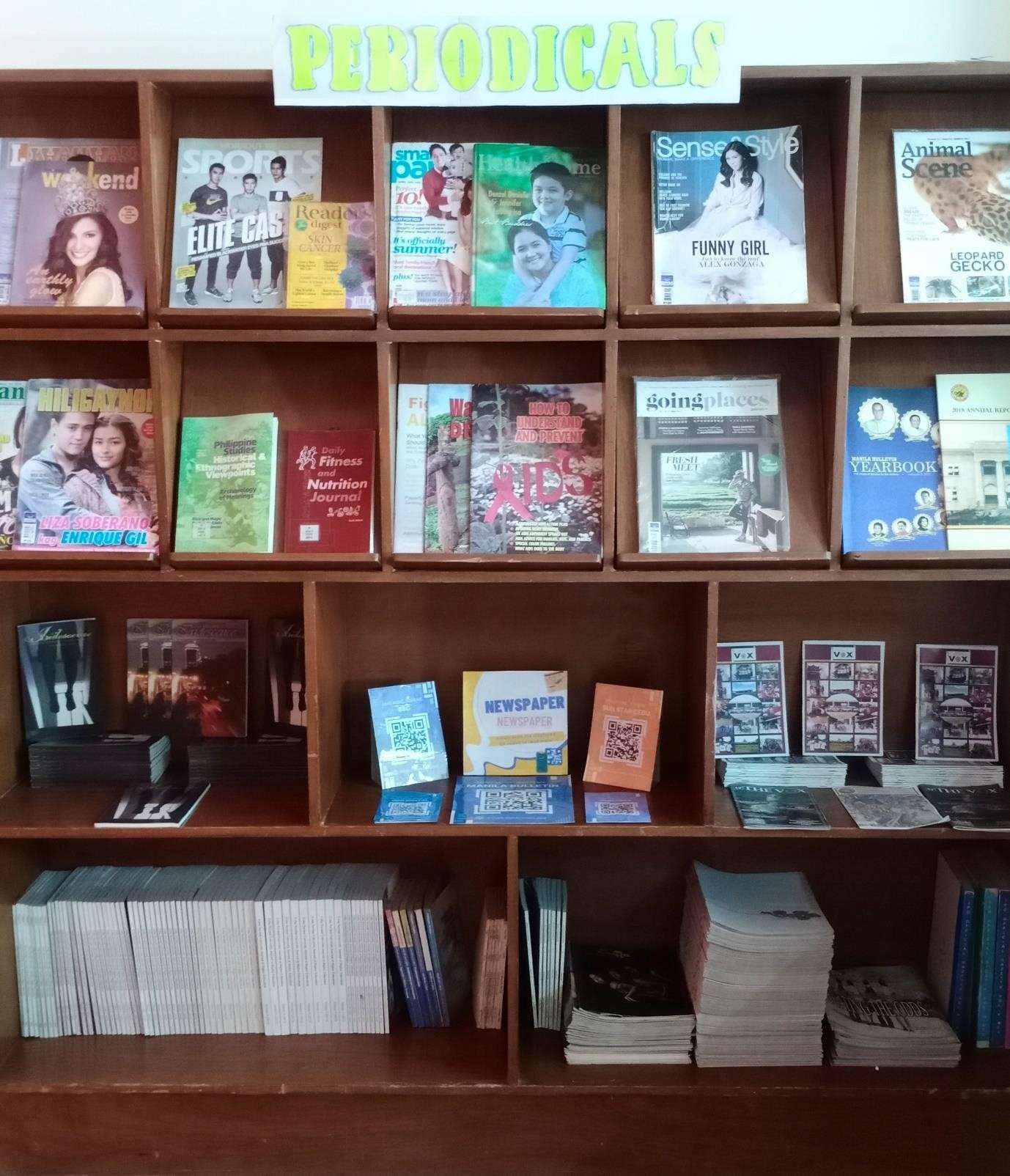
PERIODICALS SECTION

HISTORY

The establishment of the Cebu Normal University - Balamban Campus Library is intertwined with the birth of the campus itself. When the CNU Balamban Campus was founded in 2002 under the leadership of Dr. Ester B. Velasquez, the second University President, alongside Governor Gwendolyn F. Garcia, Mayor Alex S. Binghay, and Tsuneishi Company, the need for a library to support academic learning was recognized.

From its inception, the library aimed to provide students and faculty with essential learning resources despite the challenging conditions of the original site in Barangay Lamesa.The first library, like the campus, was housed in one of the 10 classrooms donated by Tsuneishi Company, adjacent to deep ravines that posed natural hazards.

When safety concerns forced the campus to relocate — first to Brgy. Poblacion and later to Quail Hollow Resort — the library moved alongside, ensuring that learning resources remained accessible to students despite the lack of a permanent facility.

In 2015, when the Mendoza family donated a 2-hectare site in Brgy. Nangka, the dream of a permanent home for both the campus and the library began to take shape. Construction of the new three-storey building started on August 22, 2020, with support from Deputy Speaker and Congressman Pablo John Garcia, who allocated P25 million for the building’s construction — a portion of which was dedicated to the library’s development.

The library now stands as a modern learning hub, embodying the university’s commitment to providing world-class, future-proof education. It offers a diverse collection of printed and digital resources, supported by technology and a learner-centered environment. Over the years, the library has evolved alongside the campus, embracing innovation and fostering academic excellence.

Today, the CNU Balamban Campus Library remains a vital cornerstone of the university, supporting its mission to develop globally competent graduates and contributing to the campus’s recent achievements, including its recognition in the 2024 WURI Rankings under the Student Support and Engagement category for the AGAK: A Student Support System initiative.

The library’s journey — from a small, makeshift space on a mountain slope to a SMART learning hub — reflects the resilience and dedication of the CNU Balamban community. As the campus continues to grow and push for regular campus status, the library stands ready to expand its resources, services, and impact to serve future generations of Normalites.

Vision

The CNU Balamban Campus Library envisions itself as a Globally Recognized, Agile, and Technologically-Proofed SMART Learning Hub, empowering students and faculty with seamless access to diverse, high-quality information resources, fostering innovation, and supporting lifelong learning in a dynamic academic environment.

Mission

The CNU Balamban Campus Library is dedicated to:

  1. Providing Future-Proof Access to Knowledge — ensuring a resilient, technology-enabled, and inclusive library environment that supports students and faculty in adapting to volatile, uncertain, complex, ambiguous, and divergent (DVUCAD) conditions.
  • Equipping Users with World-Class Information Literacy Skills — empowering the academic community with research, digital literacy, and critical thinking competencies essential for lifelong learning and global competitiveness.
  • Fostering Innovation and Collaboration — creating an agile, collaborative, and resource-rich space where learners, educators, and researchers thrive, contributing to the university’s vision of producing great leaders, professionals, and stewards of society.
  • Sustaining a SMART Library Ecosystem — integrating cutting-edge technology and sustainable practices to build a responsive, student-centered library that evolves with the changing needs of education and society.
  1. GENERAL POLICIES
    1. ADMISSION

CNU Stakeholders

  1. Only bona fide students, faculty members, officers of the administration and staff of CNU are allowed to use the library.
  2. Students are required to present their validated School I.D. upon entering the library.
  3. Students must be in complete uniform during class days and in proper school attire during free days.
  1. LIBRARY DECORUM
  2. Library users are required to observe and obey library policies including the wearing of the prescribed school uniform (undergraduate students) and School I.D. at all times.
  3. Food and drinks are not allowed inside the library. Food and drinks are a hazard to library materials and equipment and the spilling of such can create a fall and/or a pest problem. Smoking is absolutely prohibited in all areas of the university.
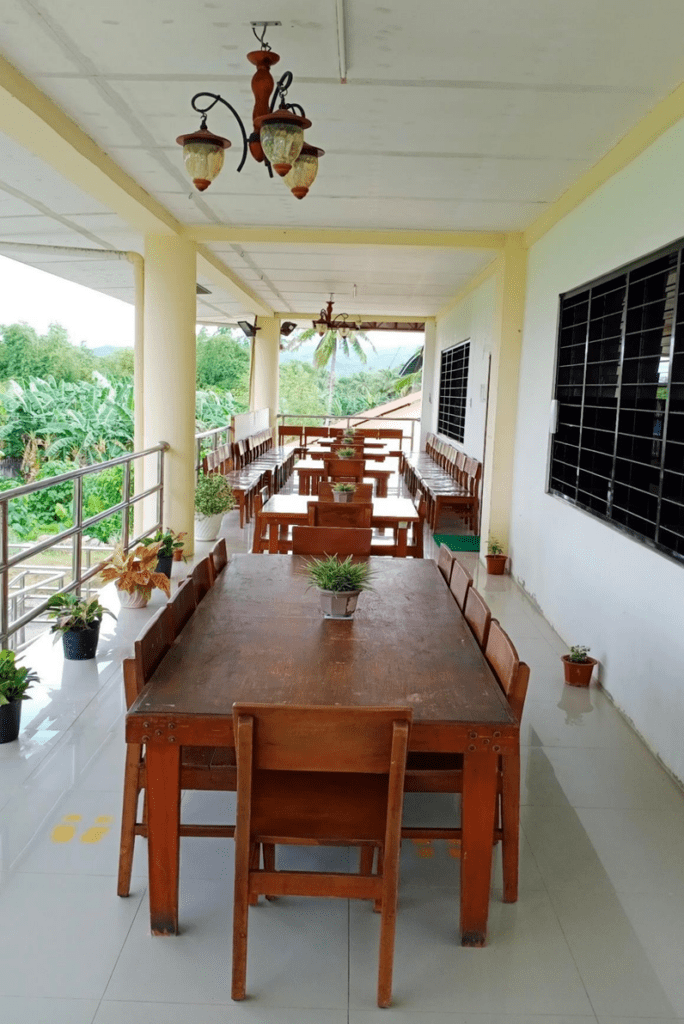
  4. To accommodate students needing a break, the CNU Balamban Campus Library provides an open space area outside the library entrance. Users may return to the library through the entrance after their break.
  5. Handle library materials with care. Avoid marking, underlining, inserting bulky objects, or folding pages ("dog ears"), as these actions can shorten the lifespan of library materials.
  6. Books and journals must be properly checked out before they can be taken out of the library for home reading or photocopying.
  7. Cleanliness and orderliness in the library are essential. Chairs must be pushed back under the table after use and should not be moved from one place to another.
  8. The use of headphones for personal stereos and mobile phones is allowed, provided that users do not disturb others who wish to study or conduct research in silence.
  9. Receiving and making phone calls must be done outside the library.
  10. A designated laptop charging station is available for library users. All other electrical outlets inside the library are for official library use only. Users are not allowed to use these outlets for charging laptops or mobile phones to prevent electrical malfunctions.
  • Library users are responsible for their personal belongings. The library is not liable for any lost items.
  1. FINES AND PENALTIESOverdue books

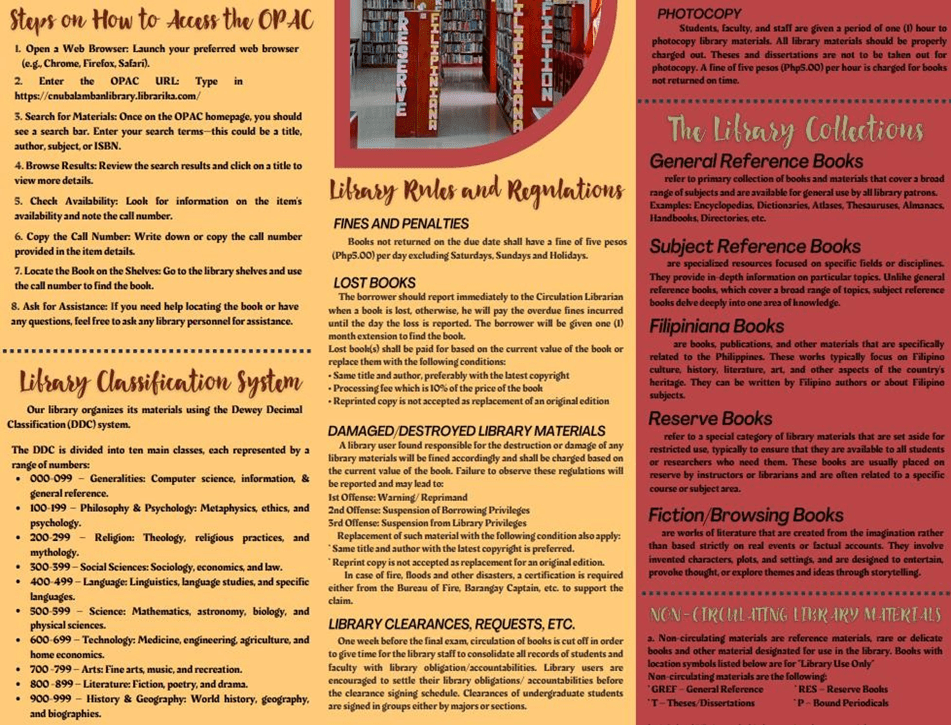
Books not returned on the due date shall have a fine of five pesos (Php5.00) per day excluding Sundays and Holidays.

  1. Lost books

The borrower should report immediately to the Circulation Librarian when a book is lost, otherwise, he will pay the overdue fines incurred until the day the loss is reported. The borrower will be given one (1) month extension to find the book.

Lost book(s) shall be paid for based on the current value of the book or replace them with the following conditions:

  • Same title and author, preferably with the latest copyright
    • Processing fee which is 10% of the price of the book
    • Reprinted copy is not accepted as replacement of an original edition
  1. Damaged/Destroyed library materials

A library user found responsible for the destruction or damage of any library materials will be fined accordingly and shall be charged based on the current value of the book. Failure to observe these regulations will be reported and may lead to:

1st Offense: Warning/ Reprimand

2nd Offense: Suspension of Borrowing Privileges 3rd Offense: Suspension from Library Privileges

Replacement of such material with the following condition also apply:

  • Same title and author with the latest copyright is preferred.
  • Reprint copy is not accepted as replacement for an original edition.

In case of fire, floods and other disasters, a certification is required either from the Bureau of Fire, Barangay Captain, etc. to support the claim.

  1. LIBRARY CLEARANCES, REQUESTS, ETC.

One week before the final exams, book circulation is temporarily suspended to allow library staff time to consolidate records of students and faculty with outstanding library obligations or accountabilities. Library users are encouraged to settle any outstanding dues before the scheduled clearance signing.

Clearances for undergraduate students are processed in groups, organized by program or section. The Campus Librarian signs all student clearances. Faculty and staff clearances are countersigned by the Campus Librarian before final approval by the OIC

- Head Librarian. In the event the OIC - Head Librarian is unavailable, the Campus Librarian may sign on their behalf.

  1. CONTROL AND SECURITY MEASURES

To ensure the safety and security of library resources and users, the CNU Balamban Campus Library has an electronic surveillance system (CCTV) installed in key areas. Additionally, the library is equipped with spacious aisles, designated emergency exits, fire extinguishers, and a smoke alarm system to uphold safety protocols.

  • CIRCULATION
  • BORROWING POLICIES FOR HOME USE BOOKS

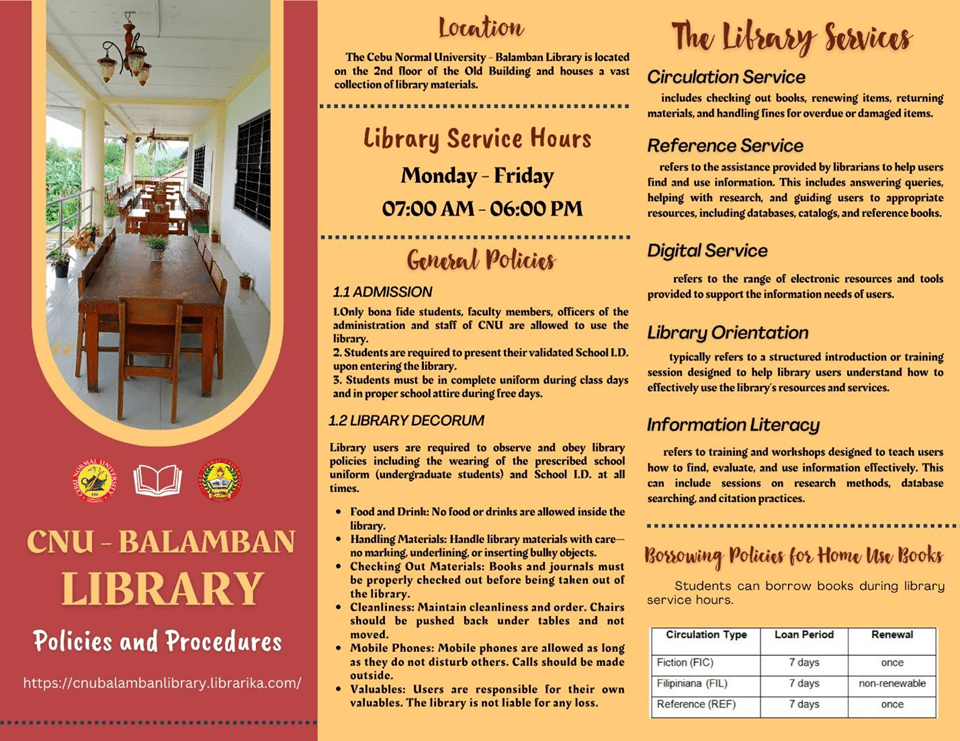
The library is open from Monday to Friday, 7:00 AM to 6:00 PM.

  • Students
  • All bona fide students of CNU may borrow a maximum of ten (10) books at a time. The Validated School I.D. is required in borrowing books and other library materials.
  • Reference and Fiction books can be borrowed for seven (7) days, and can be renewed once, provided there has been no prior request for them. Filipiniana books can be borrowed for seven (7) days, non-renewable.
    • Faculty
  • Permanent faculty members and Staff are allowed to borrow books for home use to a maximum of twenty (20) books per semester;
  • Contractual faculty and employees cannot borrow books for take-home use unless a permanent faculty member / permanent administrative staff will borrow the books for them.
  • A faculty /administrative staff needing a material should personally visit the library and sign the book card of the book borrowed. In case another person will

get the material, a written authorization and Employee I.D. must be presented to the circulation librarian;

  • Faculty /administrative staff members are discouraged from borrowing library books for other members of the family or friends;
  • Reserve books with only one copy maybe borrowed by a faculty for seven (7) days after which the book will be recalled by the circulation librarian.
  • Regular faculty members are required to return the books every semester or to renew if they still need them. To renew, borrowed books should be brought to the circulation in charge to update the record;
  • All faculty members are discouraged from requesting another person (student, fellow faculty member, etc.) to return borrowed books in their behalf;
  • Borrowing privileges will be suspended when materials have not been returned after each semester/summer term;
  1. All faculty members and administrative staff who are enrolled in the Graduate School follow the same policy like undergraduate students;
  • LOAN PERIOD BY CIRCULATION TYPE
  1. Library materials are circulated as follows:
Circulation TypeLoan PeriodRenewal
Fiction (FIC)7 daysonce
Filipiniana (FIL)7 daysnon-renewable
Reference (REF)7 daysonce
Reserve (RES)Library use / Photocopy (1) hour only
  • Book loans for home use and photocopying are from 7:00AM to 5:45PM. This is to ensure that the library staff will have time to do housekeeping jobs like filing of book cards, and shelving of books.
  • PHOTOCOPY

Students, faculty, and staff are given a period of one (1) hour to photocopy library materials. All library materials should be properly charged out. Theses and dissertations are not to be taken out for photocopy. A fine of five pesos (Php5.00) per hour is charged for books not returned on time.

  • NON-CIRCULATING LIBRARY MATERIALS
  • Non-circulating materials are reference materials, rare or delicate books and other material designated for use in the library. Books with location symbols listed below are for “Library Use Only”

Non-circulating materials are the following: GREF General Reference

FILGREF Filipiniana General Reference T Theses/Dissertations

P Bound Periodicals RES Reserve Books AS American Studies BC British Council

CB Children’s Books CP Clinical Papers TP Technical Papers

  • A School I.D. is needed in borrowing these materials.
  • RESERVE
  • Reserve books are for “Library Use Only” and may be charged out for “photocopy for a period of one (1) hour only.
  • A Validated School I.D. is needed in borrowing these materials.
  • Students can borrow a maximum of one (1) book at a time.
  • Regular faculty members and staff are allowed to borrow books for home use to a maximum of five (5) books per semester;
  • All faculty members and non-teaching staff who are enrolled in the Graduate School follow the same policy like undergraduate students.
  • PERIODICALS

Policies on the Use of Periodicals:

  1. Journals, magazines, newspapers, information files, and bound periodicals are for “library use only”, however users can also borrow these materials for photocopy outside for one (1) hour. Students may borrow three (3) titles at a time.
  2. Validated School I.D. is needed in borrowing these materials.
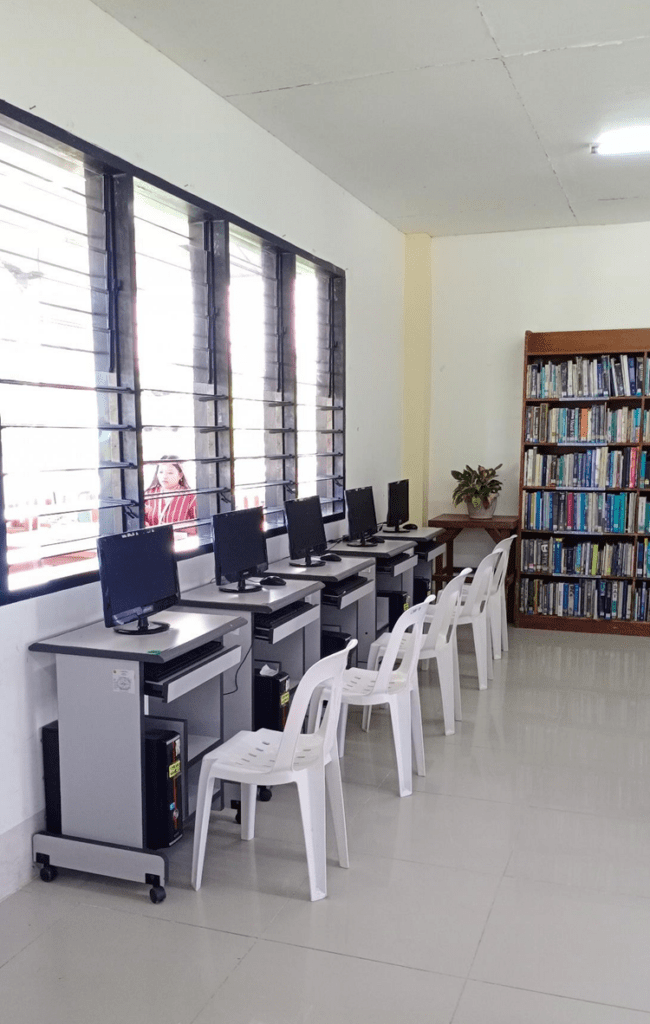
  •  ​COMPUTER AREA

a. The library's computer area is intended for academic and research purposes

only.

b. A valid school ID must be presented to the library staff upon entry.

  • Usage is limited to one (1) hour per day on a first-come, first-served basis.
  •  ACCESSIBLE LEARNING RESOURCE CENTER


The CNU-Balamban Campus Library is committed to providing an inclusive and accessible environment for all users, including persons with disabilities (PWDs). The library features wheelchair-accessible entrances and a ramp for easy access. Shelving is arranged at a convenient height for better reach, and subject areas are labeled with large, clear signage.

Library staff are readily available to assist with retrieving materials or navigating the space when needed. Accessible restrooms are also available for user convenience. Additionally, users may bring personal assistants or guide dogs to support their visit.

Service Hours and Locations

The Cebu Normal University - Balamban Campus Library is located on the 2nd floor of the Old Building. It houses a diverse collection of library materials, including references, fiction, Filipiniana, periodicals, and more — supporting the academic and research needs of students and faculty.

Location: 2nd Floor, Old Building, CNU-Balamban Campus

Service Hours: Monday to Friday, 7:00 AM - 6:00 PM

Facilities and Services

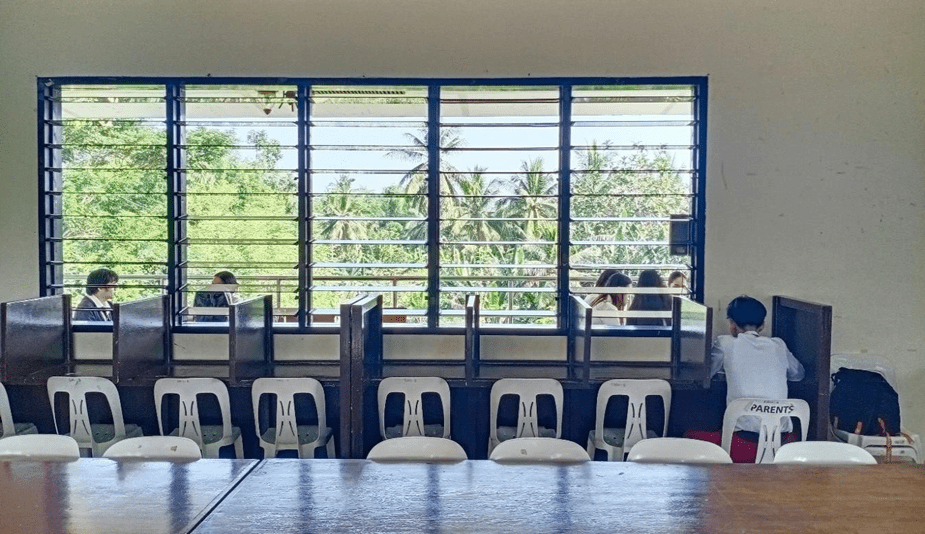
INDIVIDUAL STUDY CARRELS
FACULTY AREA
COMPUTER AREA
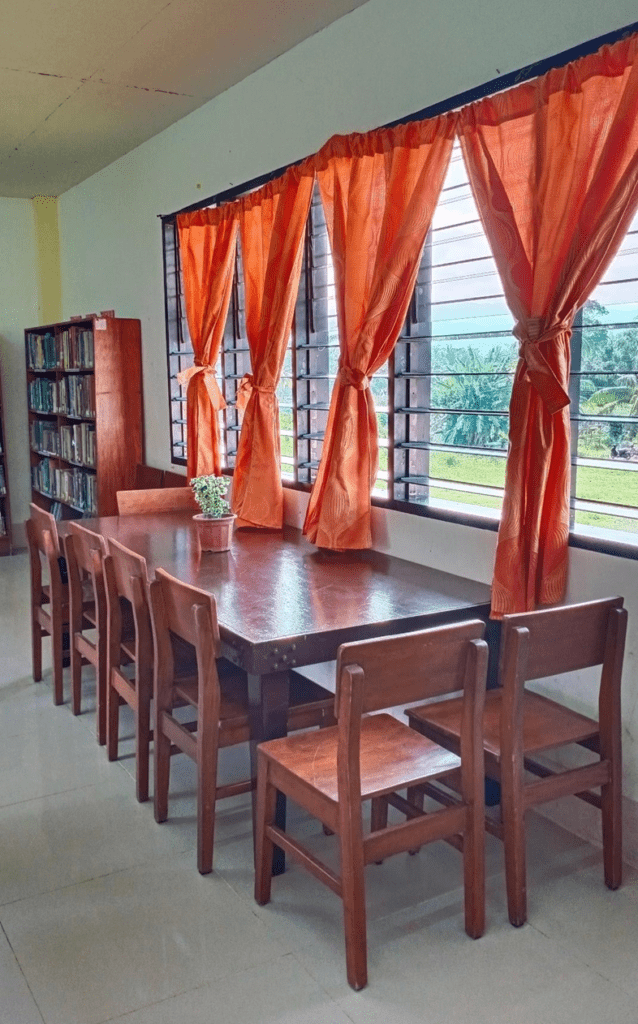
READING AREA
OPEN SPACE AREA

Library Guide

Ask a Librarian

You are welcome to Contact a Librarian, a place on the Web wherein you can contact from our Reference Librarians through email: balambanlibrary@cnu.edu.ph; or

Chat live and ask your question

We are online from Monday to Friday

8:00 AM – 5:00 PM during regular semesters

X
Cebu Normal University
PRIVACY POLICY

Policy Statement

This Privacy Policy is adopted in compliance with the Data Privacy Act of 2012 (Republic Act No. 10173), its Implementing Rules and Regulations (IRR), and other relevant issuances of the National Privacy Commission (NPC). The University is committed to protecting and respecting your personal data privacy. We process personal information in accordance with the principles of transparency, legitimate purpose, and proportionality. This Policy informs how we collect, use, disclose, store, protect, and dispose personal information of our data subjects.

Definitions

Personal information refers to any information, whether recorded in a material form or not, from which the identity of an individual is apparent or can be reasonably and directly ascertained by the entity holding the information or when put together with other information that would directly and certainly identify an individual.

Sensitive information is a type of personal information with the risk of discrimination against the Data Subject. These are about an identifiable person’s racial or ethnic origin, marital status, color, and religious, philosophical, or political affiliations. It is also, about an individual’s health, education, the genetic or sexual life of person, or any proceeding for any offense committed or alleged to have been committed by such person, the disposal of such proceedings, or the sentence of any court in such proceedings; Issued by government agencies peculiar to an individual which includes, but not limited to, social security numbers, previous or current health records, licenses or its denials, suspension or revocation, and tax returns; and specifically established by an executive order or an act of Congress to be kept classified.

Privileged information refers to any and all forms of data which under the Rules of Court and other pertinent laws constitute privileged communication.

Information We Collect

The University may collect personal information in the context of its regular functions — including but not limited to the following categories:

  1. Students: contact and enrollment details, academic records, health or medical records, accommodation records, student-activity participation, and related data.
  2. Staff and job applicants: contact details, employment history, qualifications, employee-related data.
  3. Alumni profiling: contact and demographic details.
  4. Visitors, volunteers, and other stakeholders: information collected through sign-in forms, CCTV or security monitoring, photos or recordings during official events, surveys, and feedback forms.

Collection may occur by any medium, including: paper forms, electronic forms, email, website or online platforms, CCTV or video/photographic capture, surveys/questionnaires, and other lawful means.

Purposes and Uses of the Data Collected and Processed

Personal information collected may be used for:

  1. Administration of admission, enrollment, employment, alumni relations, and other official functions.
  2. Maintenance of student and employee records, including academic, health, and administrative data.
  3. Provision of University services such as counseling, scholarship administration, placement, library access, facilities use, laboratory access, security, parking, and accommodation.
  4. Internal research, quality assurance, performance monitoring, and institutional planning.
  5. Compliance with statutory obligations (e.g. reporting to government agencies when required).
  6. Security, safety, and campus management, including CCTV monitoring.

Legal Basis / Lawful Criteria for Processing

All processing of personal data is carried out in accordance with the legality, fairness, and lawfulness requirements under the Data Privacy Act and IRR.
Where applicable, processing is grounded on consent, contract, legal obligation, legitimate interest, or other lawful bases recognized under the law. The choice of lawful basis depends on the nature of data, the purpose of processing, and legal or contractual requirements.

Manner of Collection and Processing

Personal data may be collected through physical forms (paper-based), electronic forms, online or web-based platforms (e.g., registration portals, email, institutional website), CCTV or video/photo capture (for security or surveillance), event sign-in sheets or registration forms, surveys or questionnaires, or other legitimate and lawful means.

Processing may include collection, recording, sorting, storing, retrieval, use, updating, modification, blocking, destruction or other operations as allowed under the law, consistent with declared purposes.

Disclosure of Information

The University does not disclose personal information except under the following circumstances:

  1. Internal disclosure within authorized University personnel, only when necessary and appropriate for legitimate institutional purposes.
  2. External disclosure only when required or permitted by law (e.g. statutory obligations), or when the data subject has provided valid consent.
  3. Sensitive personal information or privileged information is processed and disclosed only in accordance with relevant legal provisions.

Risks, Safeguards and Security Measures

The University recognizes that processing of personal data entails certain privacy and security risks. Accordingly, we implement appropriate organizational, technical, and physical security safeguards to protect the confidentiality, integrity, and availability of personal data — whether in electronic or physical form. Such measures include (but are not limited to):

  1. Access controls (both digital and physical) to restrict access only to authorized personnel
  2. Use of secure storage: locked filing cabinets or secure rooms for physical records; password-protected systems, encryption, secure servers, firewalls for electronic data
  3. Secure transmission of data (when shared or transferred), secure printing and disposal protocols, and safe deletion or destruction of data when no longer needed
  4. Classification of data and periodic review of security protocols, to ensure adequacy in light of the risks presented and sensitivity of the data processed

Rights of Data Subjects

Under the Data Privacy Act and its IRR, data subjects have the following rights:

  1. Right to be informed — you have the right to know whether personal information about you will be, is being, or has been processed; the purposes of processing; the personal data to be entered; and the scope and method of processing.
  2. Right to access, correct, or update your data — you may request access to your personal information, ask for rectification of inaccuracies, or request updates.
  3. Right to object or withdraw consent — when processing is based on consent or legitimate interest, you may withdraw consent or object, subject to legal limits.
  4. Right to data portability — where applicable, you may obtain a copy of your personal data in a secure and portable format for transfer to another controller.
  5. Right to erasure or blocking — if personal data is incomplete, outdated, unlawfully obtained or processed, no longer necessary, or processing is unauthorized, you may request erasure or blocking, subject to legitimate grounds for retention (e.g. legal obligations or defense of legal claims).
  6. Right to damages — you may seek indemnification for damages resulting from inaccurate, incomplete, outdated, unlawfully obtained or unauthorized use of your personal data.
  7. Right to lodge a complaint with the NPC if you believe your data privacy rights have been violated.

Requests for access, rectification, objection, portability, erasure or complaints may be submitted in writing to the University’s designated Data Protection Officer (DPO) or Data Privacy Office.

Security, Retention, and Disposal

The University implements appropriate organizational, technical, and physical security measures to safeguard personal data — whether in paper or electronic form — against unauthorized access, disclosure, alteration, or destruction. Such measures include: secure storage (locked filing cabinets or rooms), restricted access to authorized personnel only, use of locked screens/screensavers, secure transmission (sealed envelopes or secure electronic transmission), secure printing and disposal of documents, and safe deletion or destruction of data when no longer needed.

Personal data will be retained only for as long as necessary to fulfill the declared and legitimate purposes, or as required for legal obligations or defense of legal claims. When no longer needed, personal data will be disposed of securely in accordance with University policy and relevant data-protection guidelines.

Consent, Notice, and Legitimate Processing

Where required by law, consent will be obtained from data subjects prior to collection or processing of their personal or sensitive data. In other cases (e.g. CCTV monitoring, legitimate interest), the University will inform data subjects through appropriate notice mechanisms before or at the time of data collection. Privacy notice(s) will accompany data-collection forms or be posted in conspicuous campus areas, and on the University website. At all times, data processing is based on legitimate purpose and proportional to the need.

Data Subject Access and Contact

To exercise your rights or if you have any inquiry, concern, or request regarding your personal data, please contact:

Omar B. Roma

Data Protection Officer
Email: dpo@cnu.edu.ph
Phone: 09422041421

Changes to This Policy

The University reserves the right to update or amend this Privacy Policy as necessary to reflect changes in applicable laws, regulations, regulatory guidance, or its internal data-processing practices. Updated versions will be posted on the University’s official website and, where appropriate, communicated to data subjects.