Menu

Philippine Standard Time:

On March 2, 2023, the Office of External Affairs and International Linkages held its annual In-House Review at Tandang Sora Hall, Cebu Normal University. This annual in-house extension project review is one of the most important activities for developing valuable skills, increasing coordination, and raising the project profile. It will bring together the faculty and partner agencies involved in community building, and a representative from each project attended the aforementioned event.

This Project In-House Review is one of the core processes of the Extension Services for the depressed, deprived, and underserved. This review will assess the sustainability, viability, and impact of the new extension projects of faculty extensionists who do not have projects as part of their MFO4 functions at the university.

The goal of an Extension Project In-House Review is to enable the project proponents enough time to prepare next-phase proposals for existing projects for additional funding or to start a new extension project based on community needs.

With a total of 43 extension projects that were successfully presented, the School of Arts presented twelve (12) extension projects, the School of Sciences presented four (4) extension projects, the College of Teacher Education presented twelve (12) extension projects, the College of Nursing presented eight (8) extension projects, the Balamban Campus presented four (4) extension projects, and the Medellin Campus presented three (3) extension projects. This activity aims to determine whether they wish to keep working on the extension projects, terminate them, or start new ones.

In her welcome remarks, Dr. Angeline M. Pogoy, Vice-President for Research, Extension and Publication, emphasized that as a Higher Education Institution, we fulfilled a mandate in instruction, Extensions, and Research. She stated that the E-HELP program, led by Director Naila Y. Beltran has adopted communities and various projects in Education, Health, Environment, Livelihood, and Peace (E-HELP). Every year, the university conducts a call for project proposals and conducts the In-House Review to maximized the use of government resources for extension services. Several extension projects were implemented, monitored, and evaluated, or impact studies, MOAs, resolutions, and even some registered utility models and copyrighted modules were published as outputs.

 “We’ve gotten this far because it began with careful planning and dedication of people, and with the synergy in the university, we’ve grown exponentially as evidenced by our accomplishments every year,” she explained.

Several extension projects from different colleges and campuses were implemented, monitored, and along the way they have done some challenges and she knew that the extension project proponents experience that also, but even though those things that come to their way they have thrived and hope to continue doing the mandate with a commitment, dedications and diverse talent in the university and the community.

Today, with the new projects that are proposed, they will do the in-house review in extension services with their experience and expertise and will continue to work together in demonstrating the culture as to make the extension services relevant and significant to empower and improved our adaptive communities.

Dr. Josefino A. Ronquillo (Supervising Education Program Specialist, CHED ROVII), Dr. Merinisa J. Olvido (Public School District Supervisor, DepEd Mandaue City), Dr. Jonah Lydia Langga (Chief Nurse Officer, Saint Anthony Mother and Child), and Dr. Jestoni P. Babia (School Dean/Director, University of San Jose Recoletos) are the experts who have been invited to assess and evaluate the extension projects.
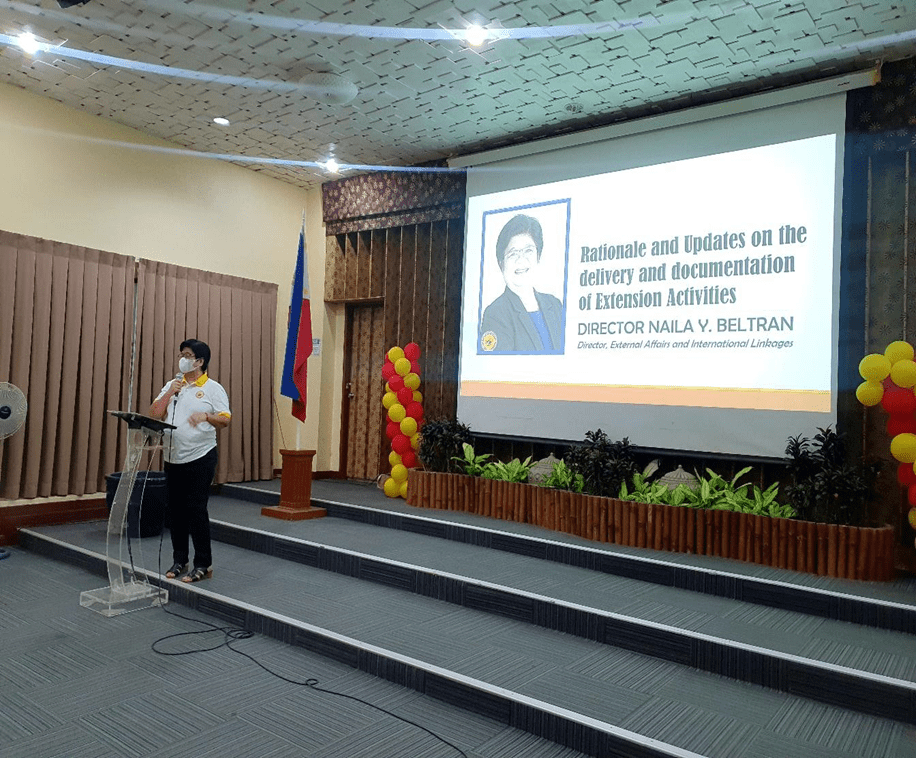
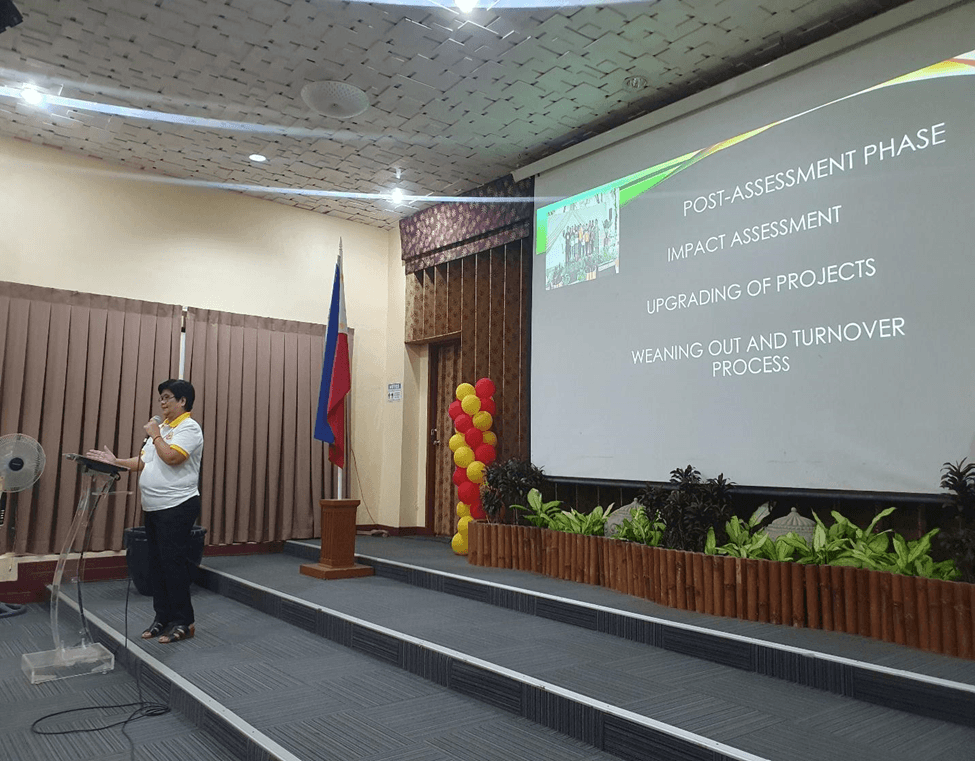
Director Naila Y. Beltran clearly presented her Rationale and Updates on Extension Activity Delivery and Documentation. She discussed the Legal Framework, the Extension Process Overview, and the Food Framework Agreement. She outlined the various mandates, an overview of extension services in Philippine Higher Education, as well as the goals of HEIs. She defined Extension Work as a collaborative, purposeful activity by the various members of HEI aimed at contributing to empowerment for identified communities so that the latter can eventually achieve development and inclusive growth on their own.

“As a collaborative, purposive activity it is assumed that extension service-in order to respond to the needs and requirements of the identified community-shall web together the functional expertise of the three pillars of higher education: instruction, research, and extension”.

Pertaining to the Extension process, she discussed the Pre-Assessment Phase, which includes the following steps: Identification of the Project Site; Meeting with Officials; Environmental Scanning; Needs Assessment/Benchmarking; MOA Signing; and Community People Orientation.

Furthermore, she also highlighted the Intervention Phase, which is a significant stage in consulting with various stakeholders before submitting a project proposal. The project proponents must submit a proposal for pre-screening, a project internal review for external evaluation, approval of the project proposal for funding, submission of a program of work, implementation, and submission of an accomplishment report at the assertion of the implementation of extension projects.

She went into great detail about the guiding principles of community development during her speeches. The community itself establishes the aims and purposes of extension initiatives; Extensionists’ duty is to direct and support the realization of these objectives.

Afterwards, she discussed the Extension Food Framework Procedure and the implementation period is April to December 2023 under the first come first served basis.
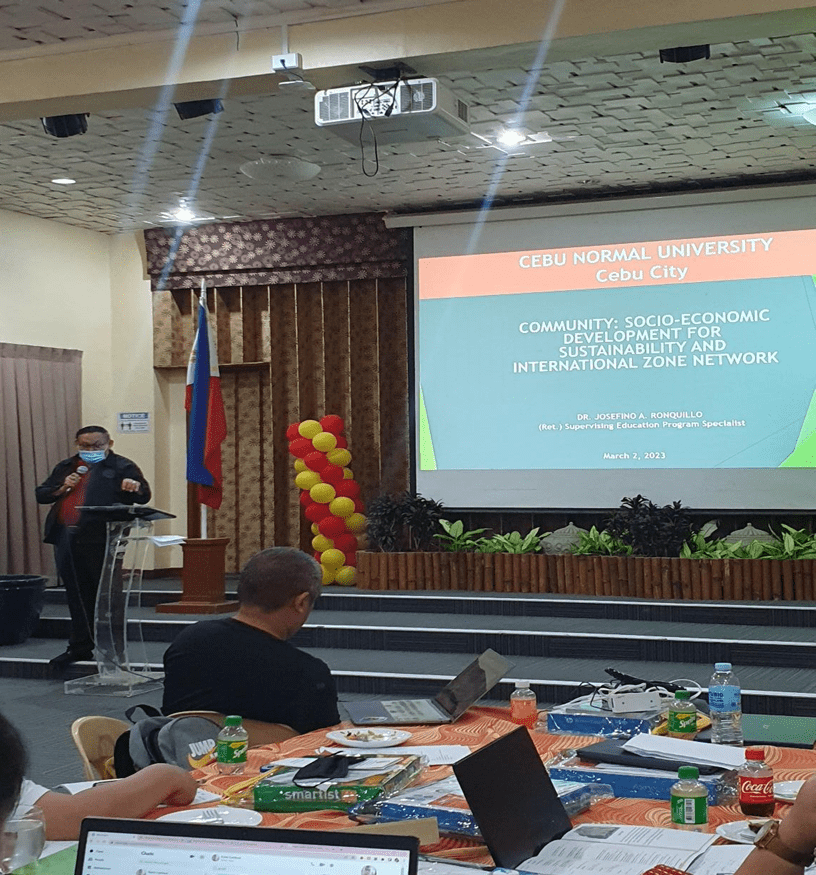
In his keynote presentation, Dr. Josefino A. Ronquillo focused on the Community: Socio-Economic Development for Sustainability and International Zone Network. He briefly talked on integrating the SDGs into the Philippine Development Plan 2023–2028 as well as the Millennium Development Goals, SGDs, and Ambisyon Natin 2040, which embody the collective long-term vision and aspirations of the Filipino people for themselves and for the nation up to 2040.

In addition, Dr. Ronquillo shared several key takeaways with the audience, emphasizing that in light of the information aforementioned, the following must be considered when making decisions: “What do we need to do” Who will carry it out? Whom, When, and How do we need to act? How do we do it? How much do the beneficiaries of our stakeholder’s benefit? To address Dr. Ronquillo’s conclusions, we need to take aggressive actions to address the issues preventing the Philippines from meeting the 17 SDGs in accordance with the revised 2030 objectives and Ambisyon Natin 2040 incorporated within the Philippine Development Plan 2023–2028. For the benefit of the Community/Stakeholders, the CNU and Community Partners will carry it out. How will it be accomplished? By partnerships, collaboration, and connections. Lastly, how much will the Stakeholders benefit? It is both locally and globally.

A question-and-answer segment immediately followed the presentations where an invited Resource Persons expressed clarifications on the result and utilization of the extension programs.
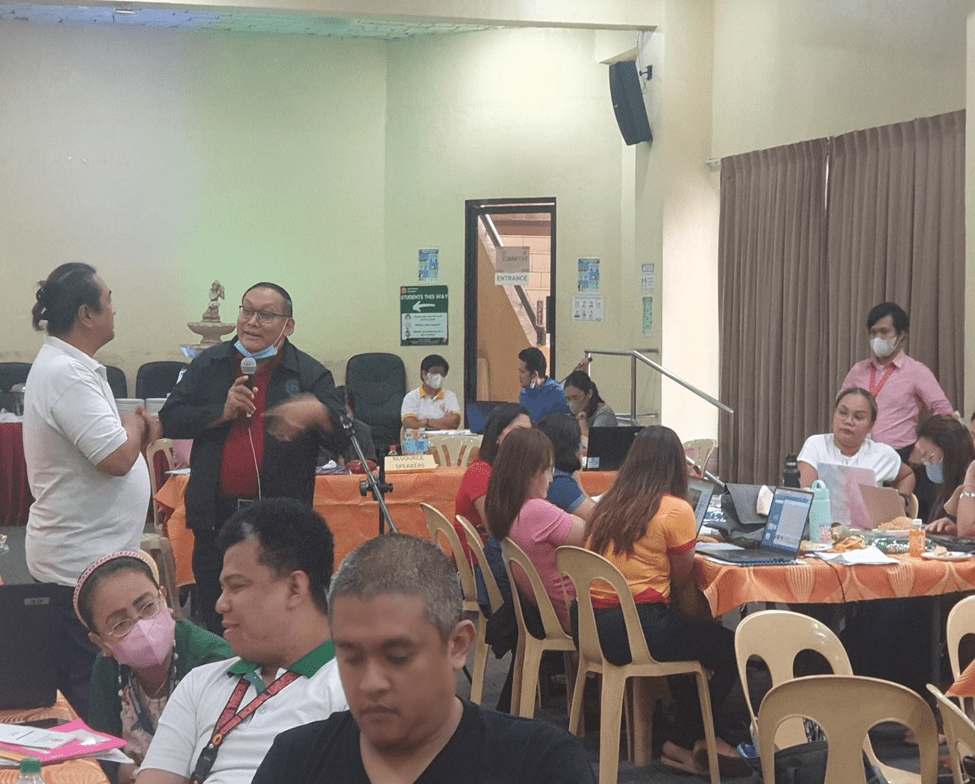
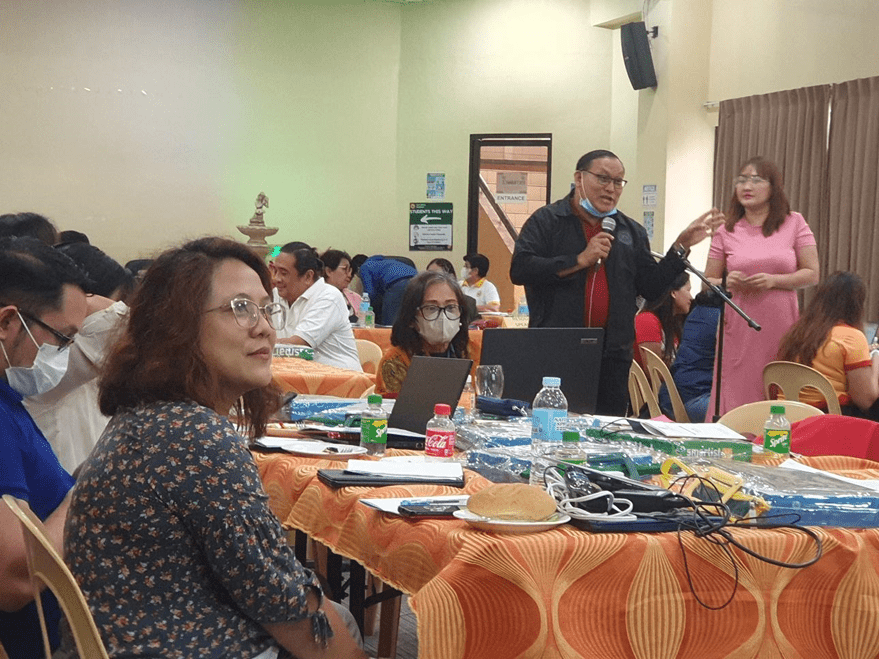
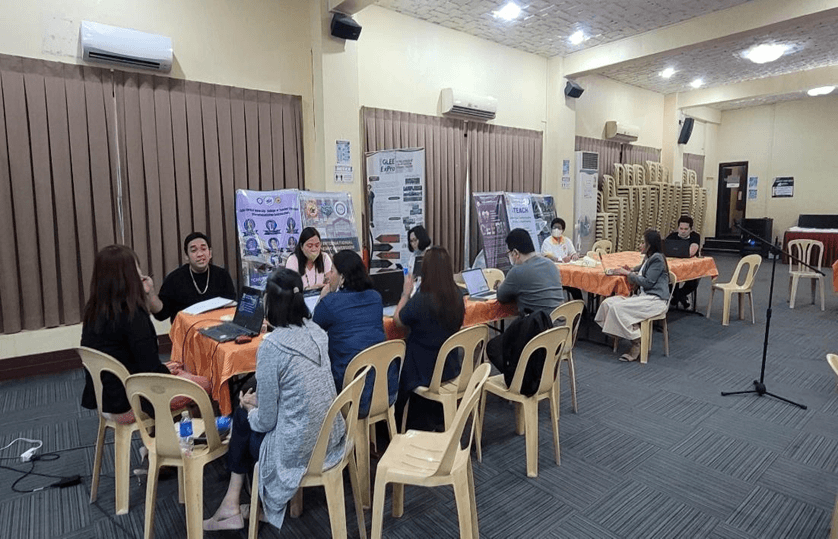
Subsequently, the breakout sessions began, with representatives from each extension project conveying. Dr. Ronquillo evaluated the extension projects presented by the Medellin and Balamban Campuses at the Office of External Affairs and International Linkages, Dr. Merinisa Olvido evaluated the extension projects of the College of Teacher Education and ILS at the CTE extension office, Dr. Jonah Lydia Langga evaluated the extension projects of the College of Nursing at the CN e-classroom, and Dr. Jestoni Babia evaluated the extension projects of CAS-School of Arts and School of Sciences at Tandang Sora Hall.
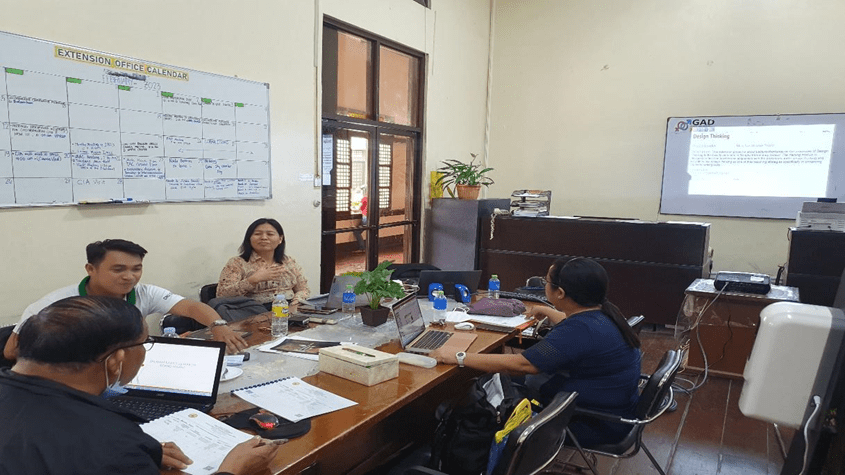
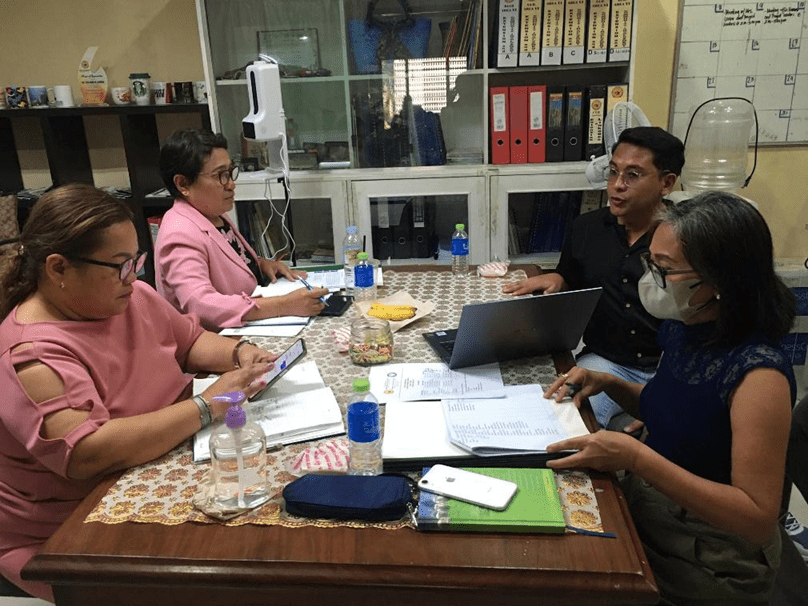
Balamban and Medellin Campuses presented their extension projects
College of Teacher Education presented their extension projects
CAS School of Arts and School of Sciences presented their extension projects

The EAIL team would like to extend their gratitude to the Resource Persons who analyzed and reviewed the extension projects as well as to the project proponents for their efforts in delivering extension services. (LET)
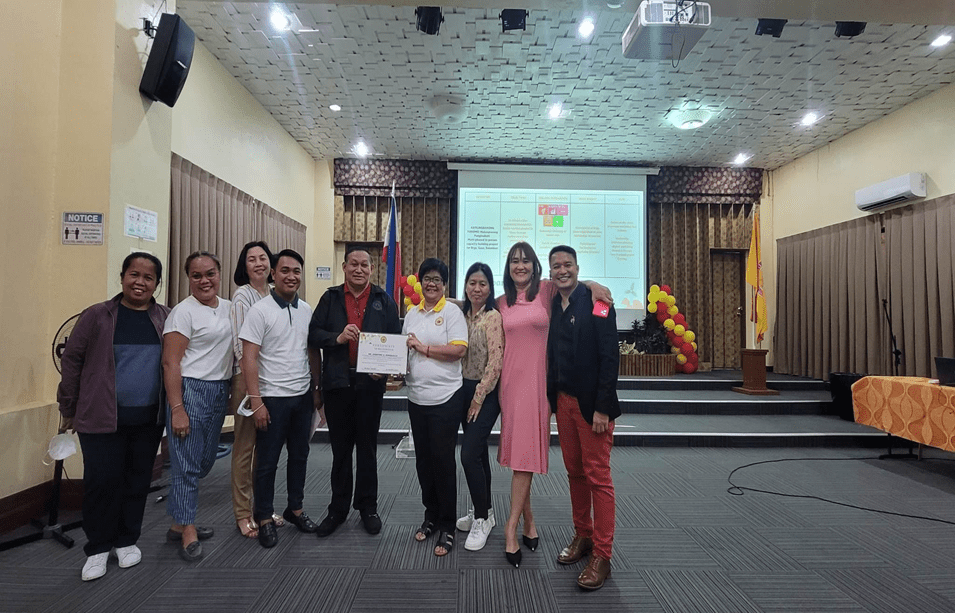
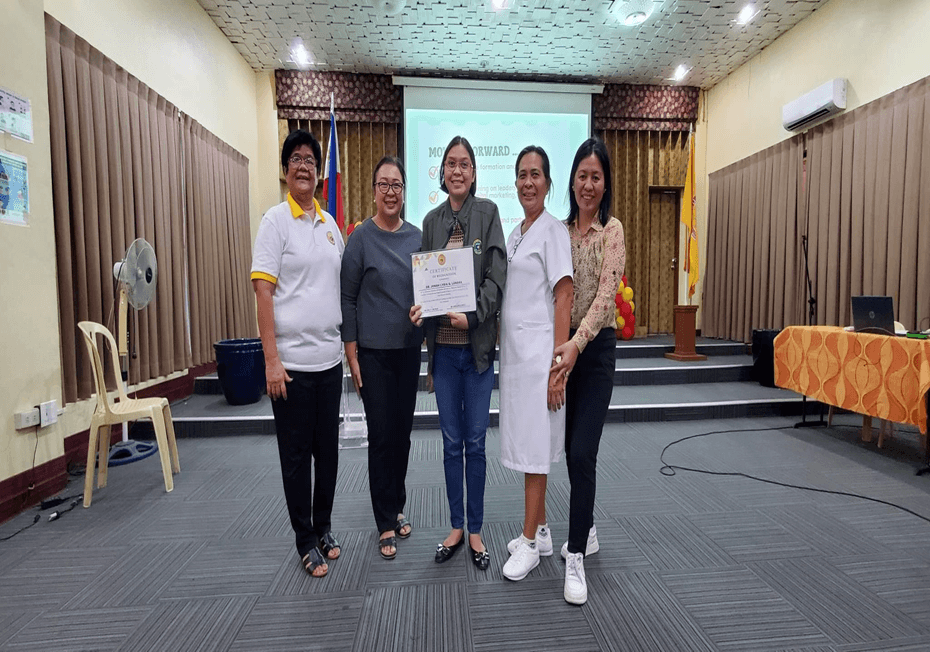
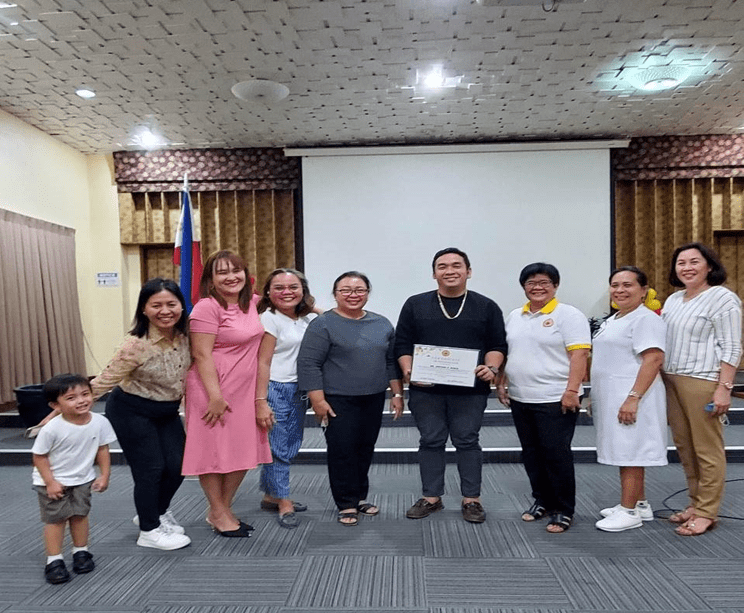
Photo opportunity along with Dr. Josefino A. Ronquillo (Supervising Education program Specialist, CHED ROVII), together with Director Naila Y. Beltran and the College Extension Chairs.
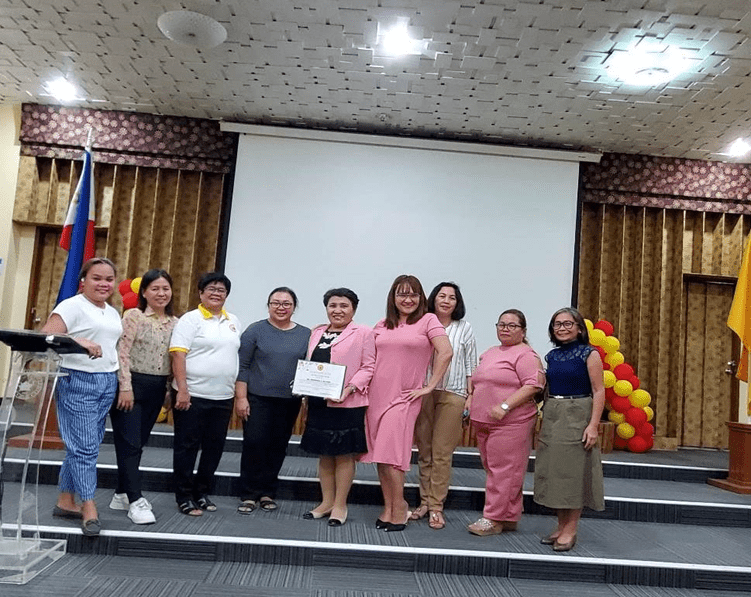
Photo opportunity along with Dr. Jonah Lydia Langga (Chief Nurse Officer, Saint Anthony Mother and Child), together with Director Naila Y. Beltran, Dr. Angeline M. Pogoy and the Extension Chairs of College of Nursing and Balamban Campus.
Photo opportunity along with Dr. Jestoni P. Babia (School Dean/Director, University of San Jose Recoletos), together with Director Naila Y. Beltran, Dr. Angeline M. Pgoy and the College Extension Chairs.
Photo opportunity along with Dr. Merinisa J. Olvido (Public School District Supervisor, DepEd Mandaue City), together with Director Naila Y. Beltran, Dr. Angeline M. Pgoy and the Extension Chairs from different colleges
X
Cebu Normal University
PRIVACY POLICY

Policy Statement

This Privacy Policy is adopted in compliance with the Data Privacy Act of 2012 (Republic Act No. 10173), its Implementing Rules and Regulations (IRR), and other relevant issuances of the National Privacy Commission (NPC). The University is committed to protecting and respecting your personal data privacy. We process personal information in accordance with the principles of transparency, legitimate purpose, and proportionality. This Policy informs how we collect, use, disclose, store, protect, and dispose personal information of our data subjects.

Definitions

Personal information refers to any information, whether recorded in a material form or not, from which the identity of an individual is apparent or can be reasonably and directly ascertained by the entity holding the information or when put together with other information that would directly and certainly identify an individual.

Sensitive information is a type of personal information with the risk of discrimination against the Data Subject. These are about an identifiable person’s racial or ethnic origin, marital status, color, and religious, philosophical, or political affiliations. It is also, about an individual’s health, education, the genetic or sexual life of person, or any proceeding for any offense committed or alleged to have been committed by such person, the disposal of such proceedings, or the sentence of any court in such proceedings; Issued by government agencies peculiar to an individual which includes, but not limited to, social security numbers, previous or current health records, licenses or its denials, suspension or revocation, and tax returns; and specifically established by an executive order or an act of Congress to be kept classified.

Privileged information refers to any and all forms of data which under the Rules of Court and other pertinent laws constitute privileged communication.

Information We Collect

The University may collect personal information in the context of its regular functions — including but not limited to the following categories:

  1. Students: contact and enrollment details, academic records, health or medical records, accommodation records, student-activity participation, and related data.
  2. Staff and job applicants: contact details, employment history, qualifications, employee-related data.
  3. Alumni profiling: contact and demographic details.
  4. Visitors, volunteers, and other stakeholders: information collected through sign-in forms, CCTV or security monitoring, photos or recordings during official events, surveys, and feedback forms.

Collection may occur by any medium, including: paper forms, electronic forms, email, website or online platforms, CCTV or video/photographic capture, surveys/questionnaires, and other lawful means.

Purposes and Uses of the Data Collected and Processed

Personal information collected may be used for:

  1. Administration of admission, enrollment, employment, alumni relations, and other official functions.
  2. Maintenance of student and employee records, including academic, health, and administrative data.
  3. Provision of University services such as counseling, scholarship administration, placement, library access, facilities use, laboratory access, security, parking, and accommodation.
  4. Internal research, quality assurance, performance monitoring, and institutional planning.
  5. Compliance with statutory obligations (e.g. reporting to government agencies when required).
  6. Security, safety, and campus management, including CCTV monitoring.

Legal Basis / Lawful Criteria for Processing

All processing of personal data is carried out in accordance with the legality, fairness, and lawfulness requirements under the Data Privacy Act and IRR.
Where applicable, processing is grounded on consent, contract, legal obligation, legitimate interest, or other lawful bases recognized under the law. The choice of lawful basis depends on the nature of data, the purpose of processing, and legal or contractual requirements.

Manner of Collection and Processing

Personal data may be collected through physical forms (paper-based), electronic forms, online or web-based platforms (e.g., registration portals, email, institutional website), CCTV or video/photo capture (for security or surveillance), event sign-in sheets or registration forms, surveys or questionnaires, or other legitimate and lawful means.

Processing may include collection, recording, sorting, storing, retrieval, use, updating, modification, blocking, destruction or other operations as allowed under the law, consistent with declared purposes.

Disclosure of Information

The University does not disclose personal information except under the following circumstances:

  1. Internal disclosure within authorized University personnel, only when necessary and appropriate for legitimate institutional purposes.
  2. External disclosure only when required or permitted by law (e.g. statutory obligations), or when the data subject has provided valid consent.
  3. Sensitive personal information or privileged information is processed and disclosed only in accordance with relevant legal provisions.

Risks, Safeguards and Security Measures

The University recognizes that processing of personal data entails certain privacy and security risks. Accordingly, we implement appropriate organizational, technical, and physical security safeguards to protect the confidentiality, integrity, and availability of personal data — whether in electronic or physical form. Such measures include (but are not limited to):

  1. Access controls (both digital and physical) to restrict access only to authorized personnel
  2. Use of secure storage: locked filing cabinets or secure rooms for physical records; password-protected systems, encryption, secure servers, firewalls for electronic data
  3. Secure transmission of data (when shared or transferred), secure printing and disposal protocols, and safe deletion or destruction of data when no longer needed
  4. Classification of data and periodic review of security protocols, to ensure adequacy in light of the risks presented and sensitivity of the data processed

Rights of Data Subjects

Under the Data Privacy Act and its IRR, data subjects have the following rights:

  1. Right to be informed — you have the right to know whether personal information about you will be, is being, or has been processed; the purposes of processing; the personal data to be entered; and the scope and method of processing.
  2. Right to access, correct, or update your data — you may request access to your personal information, ask for rectification of inaccuracies, or request updates.
  3. Right to object or withdraw consent — when processing is based on consent or legitimate interest, you may withdraw consent or object, subject to legal limits.
  4. Right to data portability — where applicable, you may obtain a copy of your personal data in a secure and portable format for transfer to another controller.
  5. Right to erasure or blocking — if personal data is incomplete, outdated, unlawfully obtained or processed, no longer necessary, or processing is unauthorized, you may request erasure or blocking, subject to legitimate grounds for retention (e.g. legal obligations or defense of legal claims).
  6. Right to damages — you may seek indemnification for damages resulting from inaccurate, incomplete, outdated, unlawfully obtained or unauthorized use of your personal data.
  7. Right to lodge a complaint with the NPC if you believe your data privacy rights have been violated.

Requests for access, rectification, objection, portability, erasure or complaints may be submitted in writing to the University’s designated Data Protection Officer (DPO) or Data Privacy Office.

Security, Retention, and Disposal

The University implements appropriate organizational, technical, and physical security measures to safeguard personal data — whether in paper or electronic form — against unauthorized access, disclosure, alteration, or destruction. Such measures include: secure storage (locked filing cabinets or rooms), restricted access to authorized personnel only, use of locked screens/screensavers, secure transmission (sealed envelopes or secure electronic transmission), secure printing and disposal of documents, and safe deletion or destruction of data when no longer needed.

Personal data will be retained only for as long as necessary to fulfill the declared and legitimate purposes, or as required for legal obligations or defense of legal claims. When no longer needed, personal data will be disposed of securely in accordance with University policy and relevant data-protection guidelines.

Consent, Notice, and Legitimate Processing

Where required by law, consent will be obtained from data subjects prior to collection or processing of their personal or sensitive data. In other cases (e.g. CCTV monitoring, legitimate interest), the University will inform data subjects through appropriate notice mechanisms before or at the time of data collection. Privacy notice(s) will accompany data-collection forms or be posted in conspicuous campus areas, and on the University website. At all times, data processing is based on legitimate purpose and proportional to the need.

Data Subject Access and Contact

To exercise your rights or if you have any inquiry, concern, or request regarding your personal data, please contact:

Omar B. Roma

Data Protection Officer
Email: dpo@cnu.edu.ph
Phone: 09422041421

Changes to This Policy

The University reserves the right to update or amend this Privacy Policy as necessary to reflect changes in applicable laws, regulations, regulatory guidance, or its internal data-processing practices. Updated versions will be posted on the University’s official website and, where appropriate, communicated to data subjects.