Cebu Normal University

CNU honors employees’ enduring service, celebrates people behind public service

Cebu Normal University (CNU) honored its employees for their years of dedicated service during the culmination of the 126th Civil Service Month, recognizing the commitment, sacrifices, and contributions that have helped shape the university through the years.

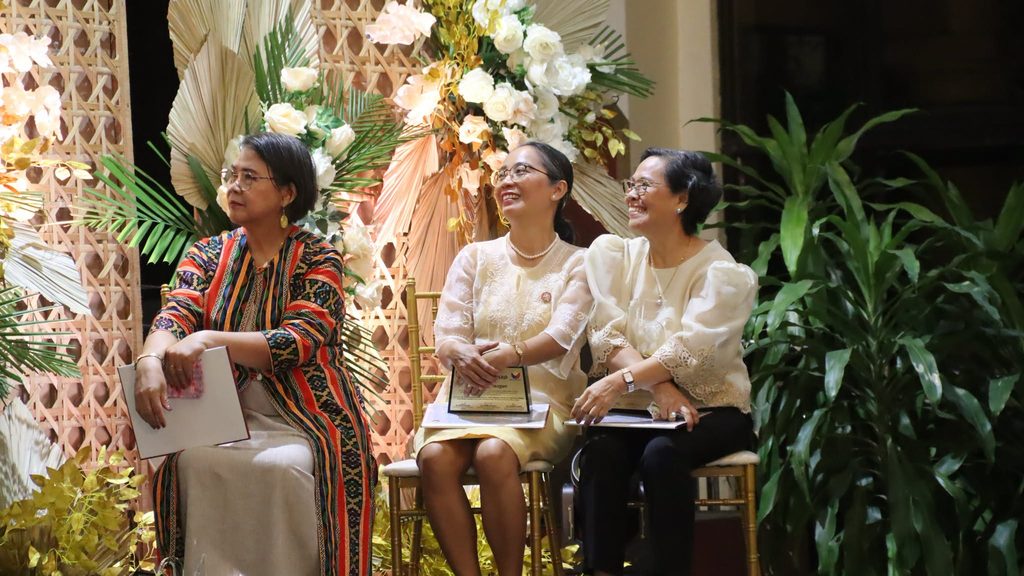
Through the Loyalty Awards, CNU recognized employees who have reached 10, 15, 20, and 25 years of government service, alongside employees who have retired after years of service to the university.

The retirees honored during the ceremony were Dr. Elena Lozano, Dr. Amelia Bonoton, Dr. Jucel Jaluage, Dr. Corazon Prejoles, Naila Beltran, Dr. Gwendelina Villarante, and Romualdo Generalao.

For 25 years of service, the university also recognized Ana Fara Nelmida and Dr. Angeline Pogoy.

The 20-year service awardees were Clarissa Gabato, Lita Bacalla, Jillian Bejoc, Erwin Corales, Lelani Dapat, and Allan Roy Elnar.

For 15 years of service, CNU recognized Jason Sabequil, Ronald Alambra, Karl Patrick Casas, Lito Diones, Ray Ferdinand Gagani, Dr. Laurence Garcia, Dr. Elena Lozano, Gibson Maglasang, Jeneveb Malusay, and Reynaldo Moral.

Meanwhile, Jeson Bustamante, Jeannie Rafols, and Dhimna Geganto were recognized for 10 years of service.

The Loyalty Awards underscore the university’s appreciation for employees whose sustained commitment and contributions have strengthened CNU’s mission and service to its stakeholders.
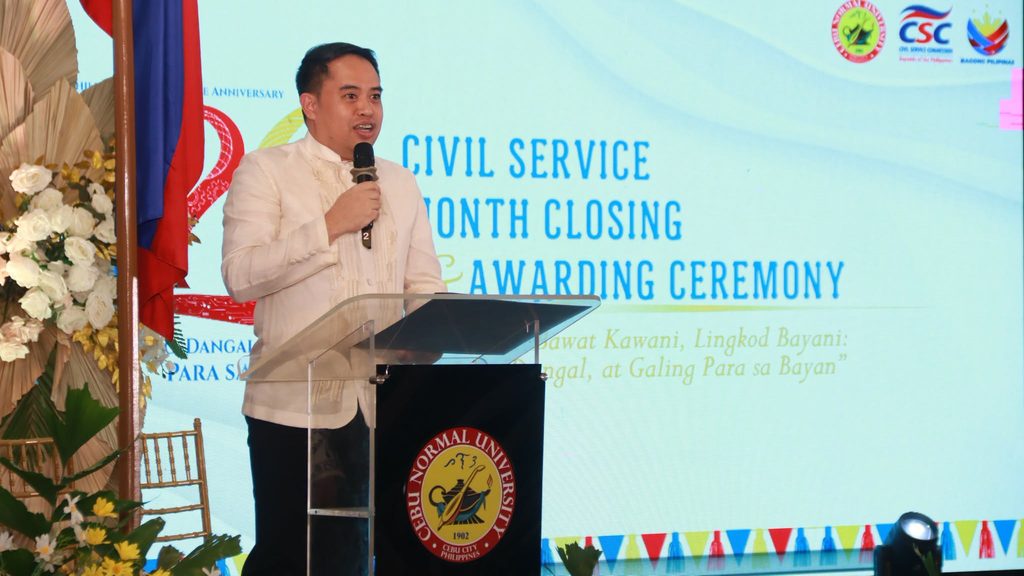
In his message, CNU President Dr. Laurence Garcia emphasized that the celebration goes beyond recognizing the number of years employees have spent in public service.

“We are not only celebrating the service. We are celebrating the people behind the service,” Garcia said, stressing that an institution is not simply made up of buildings, offices, policies, and programs, but of the people who give life to them.

He reminded the honorees that the greater value of their years of service lies in the relationships they have built and the lives they have touched along the way.

“We are in this together. We serve together. We grow together. And if we choose to help one another rather than harm one another, we leave behind not only a better institution, but a better legacy,” he added.

COMMITMENT TO SERVICE, INTEGRITY

Vice President for Research, Extension, and Auxiliary Services Dr. Angeline Pogoy, a recipient of the 25-Year Service Award, highlighted the importance of character and integrity in public service.

“When we serve without counting the cost, service itself becomes a blessing and an opportunity,” Pogoy said, emphasizing that while competence and compassion are essential, character and integrity matter—especially when no one is looking.

For Erwin Corales, who was recognized for 20 years of government service, his two decades at CNU represent more than a career, they reflect a commitment to public service and the university’s mission.

In his message, Corales described his service as a “sacred calling” and said the award serves as a reminder of the enduring principles that define meaningful public service.

He framed these principles through the word PORCELAIN: Passion in public service, Outstanding commitment, Resilience through every trial, Compassionate dedication, Excellence in duty, Loyalty to the mission, Authentic integrity, Inspiring perseverance, and Nurturing the CNU legacy for generations to come.

Jeneveb Malusay, a 15-year government service awardee, reflected on her journey in public service through the acronym EQUATION, representing Endurance, Quenching the four-fold function, Unyielding faith and first believers, Togetherness and true friendship, Inspiring the eldest in everyone, Overcoming through gratitude, and New beginnings.

“Life is a grand EQUATION. You add strength to your trials, subtract self-doubt, multiply your faith, and divide your blessings with others,” Malusay said.

She encouraged fellow public servants facing the demands of their work to remain steadfast, noting that challenges can lead to meaningful outcomes.

“Stay strong in heart, stay stable in mind, and keep serving with love,” she added.

For Jeson Bustamante, one of the recipients of the 10-Year Government Service Award, the recognition represents a renewed commitment to public service despite the challenges that come with it.

Reflecting on the realities of government work, Bustamante acknowledged the difficult days, demanding deadlines, and challenges that tested their patience, yet emphasized that employees continued to serve, learn, grow, and remain committed.

“May we continue to serve with integrity, compassion, and humility…The award is renewal of promise to keep serving, to keep helping and to keep making a difference,” he said.

ACADEMIC REGOGNITION
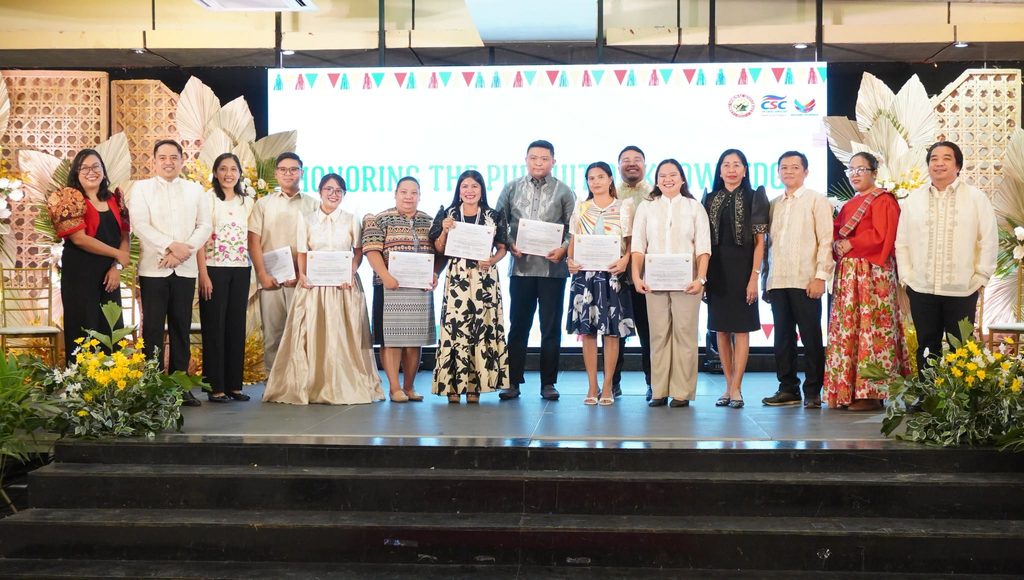
Beyond years of service, CNU also recognized 13 employees who completed their master’s and doctoral degrees, honoring their pursuit of knowledge, professional growth, and excellence.

The master’s degree holders are Manily Belara, Gilbert Carredo, and Harold Gogo, while the doctoral degree recipients are Jay Jumar Bacunawa, Rosario Fantonial, Evelyn Gimarino, Lovelyn Tipon, Fanny Mae Mobida, Clarezeil Ladringan, Baby Jane Tanucan, Angelito Cabanilla Jr., Dhimna Geganto, and Kenneth Ragaza.

The recognition underscored the university’s continuing commitment to developing employees who pursue lifelong learning and strengthen their expertise in support of CNU’s academic and public service mission.

Other employees were likewise recognized for securing top prizes in various events during the CNU Sports Day, held as part of the university’s celebration of the 126th Civil Service Month.

The awards highlighted not only employees’ professional contributions but also their participation in activities that foster wellness, camaraderie, and community spirit.

CELEBRATION OF TALENTS, CULTURES

Beyond the recognition of service milestones, the culmination of the 126th Civil Service Month celebration also celebrated the talent, creativity, and camaraderie of the CNU community through cultural presentations featuring faculty members and staff from the Main and Balamban campuses.

The College of Teacher Education (CTE) emerged as the champion in the cultural showdown.

The College of Sciences placed second, while the CNU-Balamban Campus secured third place, showcasing the creativity and talents of CNU faculty and staff.

The celebration ultimately highlighted that the strength of an institution is reflected not only in its programs and accomplishments, but also in the people who dedicate their time, talent, and service to advancing its mission.

For CNU, honoring its employees is a recognition of the past, while reaffirming a shared commitment to serve with integrity, grow together, and build a lasting legacy for generations of Normalites to come.

#alwayscrimsonandgold2026

#SDG3GoodHealthAndWellBeing

#SDG16PeaceJusticeAndStrongInstitutions

Cebu Normal University
PRIVACY POLICY

Policy Statement

This Privacy Policy is adopted in compliance with the Data Privacy Act of 2012 (Republic Act No. 10173), its Implementing Rules and Regulations (IRR), and other relevant issuances of the National Privacy Commission (NPC). The University is committed to protecting and respecting your personal data privacy. We process personal information in accordance with the principles of transparency, legitimate purpose, and proportionality. This Policy informs how we collect, use, disclose, store, protect, and dispose personal information of our data subjects.

Definitions

Personal information refers to any information, whether recorded in a material form or not, from which the identity of an individual is apparent or can be reasonably and directly ascertained by the entity holding the information or when put together with other information that would directly and certainly identify an individual.

Sensitive information is a type of personal information with the risk of discrimination against the Data Subject. These are about an identifiable person’s racial or ethnic origin, marital status, color, and religious, philosophical, or political affiliations. It is also, about an individual’s health, education, the genetic or sexual life of person, or any proceeding for any offense committed or alleged to have been committed by such person, the disposal of such proceedings, or the sentence of any court in such proceedings; Issued by government agencies peculiar to an individual which includes, but not limited to, social security numbers, previous or current health records, licenses or its denials, suspension or revocation, and tax returns; and specifically established by an executive order or an act of Congress to be kept classified.

Privileged information refers to any and all forms of data which under the Rules of Court and other pertinent laws constitute privileged communication.

Information We Collect

The University may collect personal information in the context of its regular functions — including but not limited to the following categories:

  1. Students: contact and enrollment details, academic records, health or medical records, accommodation records, student-activity participation, and related data.
  2. Staff and job applicants: contact details, employment history, qualifications, employee-related data.
  3. Alumni profiling: contact and demographic details.
  4. Visitors, volunteers, and other stakeholders: information collected through sign-in forms, CCTV or security monitoring, photos or recordings during official events, surveys, and feedback forms.

Collection may occur by any medium, including: paper forms, electronic forms, email, website or online platforms, CCTV or video/photographic capture, surveys/questionnaires, and other lawful means.

Purposes and Uses of the Data Collected and Processed

Personal information collected may be used for:

  1. Administration of admission, enrollment, employment, alumni relations, and other official functions.
  2. Maintenance of student and employee records, including academic, health, and administrative data.
  3. Provision of University services such as counseling, scholarship administration, placement, library access, facilities use, laboratory access, security, parking, and accommodation.
  4. Internal research, quality assurance, performance monitoring, and institutional planning.
  5. Compliance with statutory obligations (e.g. reporting to government agencies when required).
  6. Security, safety, and campus management, including CCTV monitoring.

Legal Basis / Lawful Criteria for Processing

All processing of personal data is carried out in accordance with the legality, fairness, and lawfulness requirements under the Data Privacy Act and IRR.
Where applicable, processing is grounded on consent, contract, legal obligation, legitimate interest, or other lawful bases recognized under the law. The choice of lawful basis depends on the nature of data, the purpose of processing, and legal or contractual requirements.

Manner of Collection and Processing

Personal data may be collected through physical forms (paper-based), electronic forms, online or web-based platforms (e.g., registration portals, email, institutional website), CCTV or video/photo capture (for security or surveillance), event sign-in sheets or registration forms, surveys or questionnaires, or other legitimate and lawful means.

Processing may include collection, recording, sorting, storing, retrieval, use, updating, modification, blocking, destruction or other operations as allowed under the law, consistent with declared purposes.

Disclosure of Information

The University does not disclose personal information except under the following circumstances:

  1. Internal disclosure within authorized University personnel, only when necessary and appropriate for legitimate institutional purposes.
  2. External disclosure only when required or permitted by law (e.g. statutory obligations), or when the data subject has provided valid consent.
  3. Sensitive personal information or privileged information is processed and disclosed only in accordance with relevant legal provisions.

Risks, Safeguards and Security Measures

The University recognizes that processing of personal data entails certain privacy and security risks. Accordingly, we implement appropriate organizational, technical, and physical security safeguards to protect the confidentiality, integrity, and availability of personal data — whether in electronic or physical form. Such measures include (but are not limited to):

  1. Access controls (both digital and physical) to restrict access only to authorized personnel
  2. Use of secure storage: locked filing cabinets or secure rooms for physical records; password-protected systems, encryption, secure servers, firewalls for electronic data
  3. Secure transmission of data (when shared or transferred), secure printing and disposal protocols, and safe deletion or destruction of data when no longer needed
  4. Classification of data and periodic review of security protocols, to ensure adequacy in light of the risks presented and sensitivity of the data processed

Rights of Data Subjects

Under the Data Privacy Act and its IRR, data subjects have the following rights:

  1. Right to be informed — you have the right to know whether personal information about you will be, is being, or has been processed; the purposes of processing; the personal data to be entered; and the scope and method of processing.
  2. Right to access, correct, or update your data — you may request access to your personal information, ask for rectification of inaccuracies, or request updates.
  3. Right to object or withdraw consent — when processing is based on consent or legitimate interest, you may withdraw consent or object, subject to legal limits.
  4. Right to data portability — where applicable, you may obtain a copy of your personal data in a secure and portable format for transfer to another controller.
  5. Right to erasure or blocking — if personal data is incomplete, outdated, unlawfully obtained or processed, no longer necessary, or processing is unauthorized, you may request erasure or blocking, subject to legitimate grounds for retention (e.g. legal obligations or defense of legal claims).
  6. Right to damages — you may seek indemnification for damages resulting from inaccurate, incomplete, outdated, unlawfully obtained or unauthorized use of your personal data.
  7. Right to lodge a complaint with the NPC if you believe your data privacy rights have been violated.

Requests for access, rectification, objection, portability, erasure or complaints may be submitted in writing to the University’s designated Data Protection Officer (DPO) or Data Privacy Office.

Security, Retention, and Disposal

The University implements appropriate organizational, technical, and physical security measures to safeguard personal data — whether in paper or electronic form — against unauthorized access, disclosure, alteration, or destruction. Such measures include: secure storage (locked filing cabinets or rooms), restricted access to authorized personnel only, use of locked screens/screensavers, secure transmission (sealed envelopes or secure electronic transmission), secure printing and disposal of documents, and safe deletion or destruction of data when no longer needed.

Personal data will be retained only for as long as necessary to fulfill the declared and legitimate purposes, or as required for legal obligations or defense of legal claims. When no longer needed, personal data will be disposed of securely in accordance with University policy and relevant data-protection guidelines.

Consent, Notice, and Legitimate Processing

Where required by law, consent will be obtained from data subjects prior to collection or processing of their personal or sensitive data. In other cases (e.g. CCTV monitoring, legitimate interest), the University will inform data subjects through appropriate notice mechanisms before or at the time of data collection. Privacy notice(s) will accompany data-collection forms or be posted in conspicuous campus areas, and on the University website. At all times, data processing is based on legitimate purpose and proportional to the need.

Data Subject Access and Contact

To exercise your rights or if you have any inquiry, concern, or request regarding your personal data, please contact:

Omar B. Roma

Data Protection Officer
Email: dpo@cnu.edu.ph
Phone: 09422041421

Changes to This Policy

The University reserves the right to update or amend this Privacy Policy as necessary to reflect changes in applicable laws, regulations, regulatory guidance, or its internal data-processing practices. Updated versions will be posted on the University’s official website and, where appropriate, communicated to data subjects.