
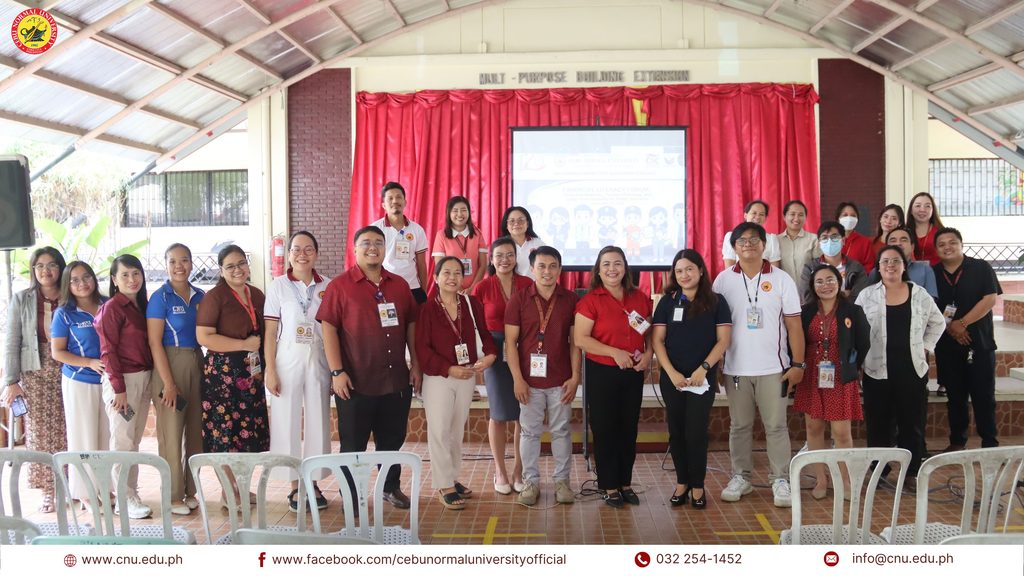
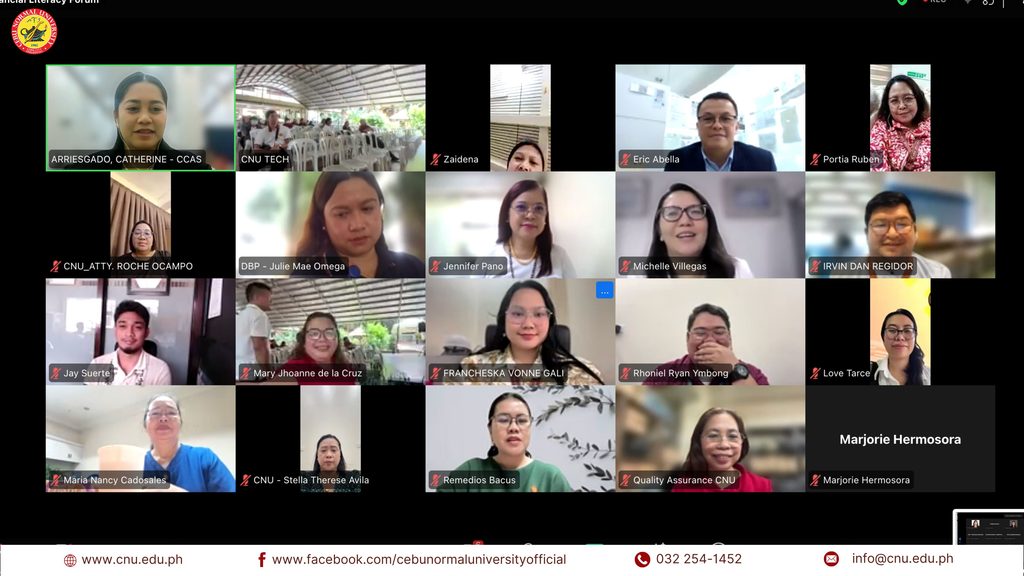
As part of the 126th Civil Service Month culminating activities, faculty members from various colleges and campuses and administrative personnel of Cebu Normal University (CNU) attended a hybrid Financial Literacy Forum today.
Organized by the Human Resource Management Unit (HRMU) and held via Zoom and at the ILS Centennial Stage, the forum aimed to equip civil servants with knowledge on “financial wellness, prudent planning, and long-term security for public servants.”
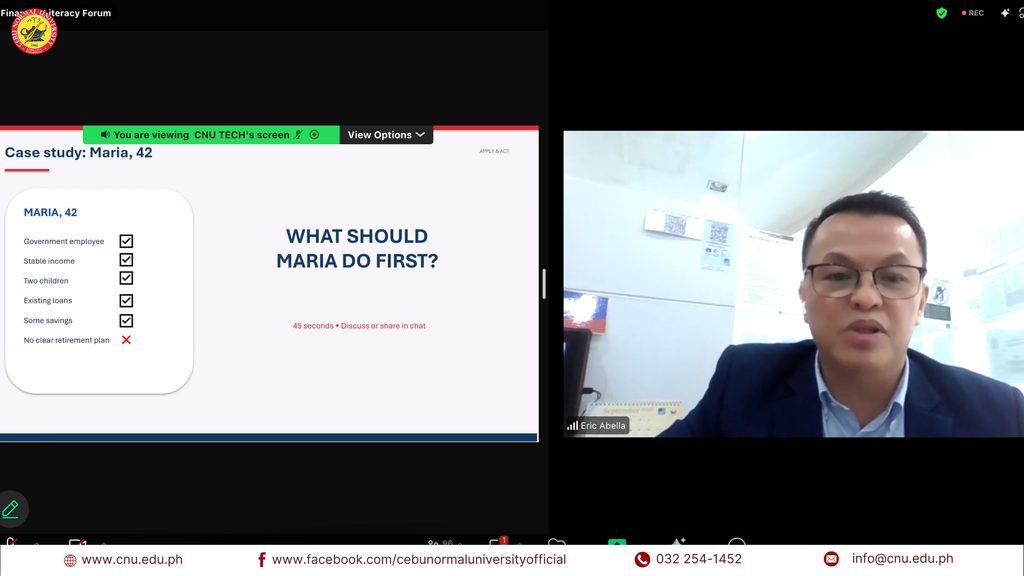
Eric Abella, Technical Assistant of the Development Bank of the Philippines (DBP) and keynote speaker, urged employees to be intentional in making financial decisions.
Acknowledging that there is no single investment strategy suitable for everyone, Abella emphasized the importance of financial control, preparedness, and informed choices.
“Some earn more but become financially stressed. Others earn less but are more organized and prepared. It is not how much we earn, but more about the habits and systems we build around what we earn,” he said.
“Control means knowing where your money goes. Financial wellness does not require perfection and does not require being rich,” he added.
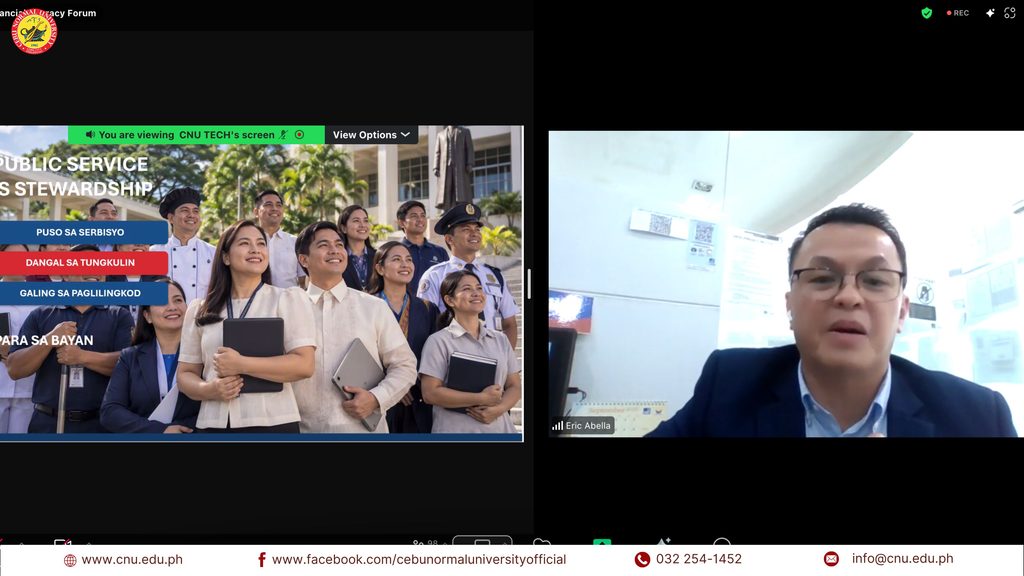
Abella also discussed common spending habits that can affect personal finances, noting that small expenses can accumulate over time. He encouraged participants to redirect repetitive spending toward more meaningful financial goals.
“Give every peso a purpose—live, protect, save, grow, enjoy. The goal is not to remove happiness but to ensure that enjoyment does not consume tomorrow’s security. We protect not because we expect something bad to happen, but because uncertainty is part of life,” he said.
“What matters is intentionality. If there is no room yet for every category, start with a small amount and build gradually. A budget is not a punishment because the essential priorities have been considered,” he added.
Meanwhile, Atty. Roche Ocampo, Vice President for Administration and Finance, encouraged employees to view financial literacy as a form of self-care and an important part of preparing for retirement.
“Financial literacy is a form of self-care. While we are serving in our active years, we have to manage our income wisely, such as by budgeting and avoiding debt traps, among others,” Ocampo said.
“Financial literacy is a bridge to a comfortable and dignified life after we retire. Retirement is not a date but an inevitable future that we need to prepare for. It should be a fulfillment, a freedom, good health, and not a season of financial stress,” Ocampo added.
The forum was among the university’s activities of the 126th Civil Service Month celebration.
#AlwaysCrimsonAndGold2026
#SDG4QualityEducation